EN

Why Do Sunroof Drain and Trunk Trim Repairs Depend on Watertight Fastener Clip Designs?
A Fastener Clip can look like a minor replacement part, yet the choice matters when a repair point sits beside a sunroof drain route, a trunk opening, or exterior trim exposed to rain. In those locations, the clip does more than hold a panel. It may pass through a hole, support trim alignment, and interact with the surfaces that keep water outside the protected body cavity. That is why a Watertight Fastener Clip should be evaluated as a fitment system rather than as a generic push retainer.
From an installation-and-fitment verification perspective, the first question is not simply “Will this Fastener Clip snap in?” It is whether the hole, panel thickness, trim geometry, and sealing arrangement match the repair location. A clip that feels secure in a dry bench test may still be the wrong choice if its head, washer, or mating surface does not correspond to the original opening. This is especially relevant around drain-adjacent trim and trunk areas, where a small gap can direct water behind a panel instead of elsewhere from it.
Why water-exposed trim locations change the Fastener Clip decision
Many automotive clips are selected mainly for retention: their stem expands, barbs engage, or a head holds a trim piece against a panel. For sunroof drain and trunk trim work, retention remains important, but it is only one part of the decision. The repair may involve an opening through a sheet-metal flange, a plastic inner trim layer, or a mixed-material assembly. If that opening separates a wetter exterior-facing area from a protected cavity, the Fastener Clip design deserves extra attention.
A Watertight Fastener Clip commonly refers to a clip arrangement intended to work with a sealing contact area, such as a rubber washer, a molded flange, or a vehicle-specified grommet. The phrase does not prove that every clip marked this way is appropriate for every vehicle. Sealing performance depends on the actual design, surface condition, compression, and installation method. In other words, the clip and the opening must be considered together.
Search results for automotive retainers show that clips are used across trim panels, bumpers, liners, and other repair locations. That variety is useful, but it is also a warning against assuming interchangeability. A Fastener Clip intended for one dry interior panel may have a different head profile, stem length, or sealing need than one used near a trunk trim penetration.
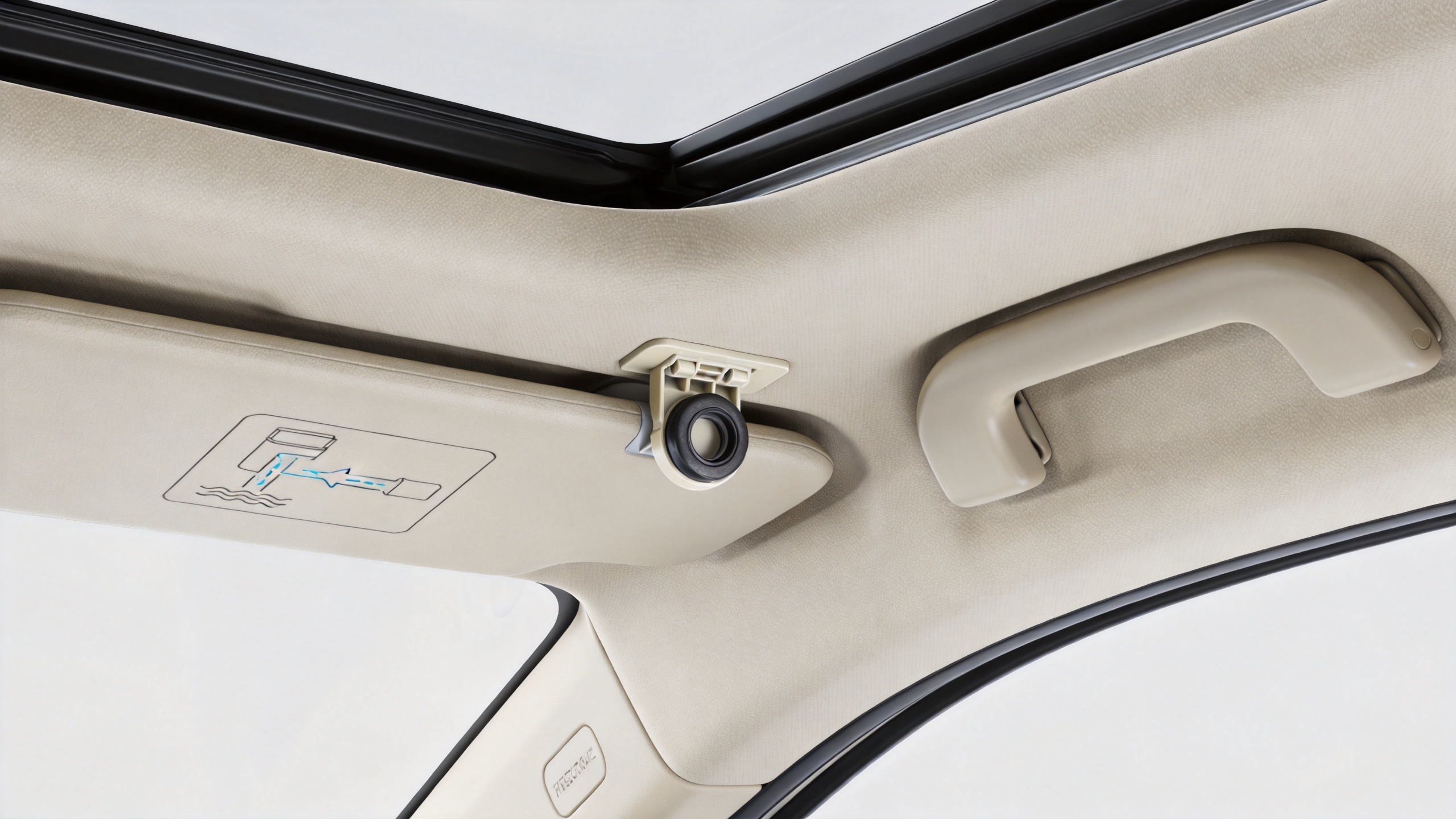
Sunroof drain-adjacent repairs: focus on the path around the clip
Sunroof drain systems are designed to channel water from the roof opening through dedicated channels and tubes. The exact route varies by vehicle, so a repair should follow the vehicle’s service information where available. When trim is removed near that route, the practical concern is whether a replacement Fastener Clip restores the panel relationship without creating an unintended path around a body opening.
Start by inspecting the original location before discarding the old retainer. Note whether there was a separate washer, a molded seal, a foam element, or a clip head that sat against a shaped surface. A Watertight Fastener Clip may need a flat, clean mating surface to work as intended. Bent sheet metal, a distorted hole, old sealant residue, or a damaged trim flange can change the way the parts meet.
It is tempting to treat a clip as a universal replacement when its stem seems close in diameter. However, diameter alone does not establish fitment. Check the hole shape, panel thickness, insertion depth, head diameter, and whether the clip must locate the trim before it locks. If the repair instructions call for a seal, grommet, or specified retainer, substituting a bare Fastener Clip can leave an information gap that should be resolved before reassembly.
Why trunk trim creates a different but related sealing problem
Trunk trim can be exposed to water from the rear opening, weatherstrip area, tail-lamp vicinity, exterior garnish, or body seams. Not every trunk-panel retainer is a water-management component. Still, when a clip occupies a penetration near an exterior-facing panel, it is sensible to ask what the original design used to manage the contact area. A Rubber-Washer Sealed Trunk Trim Retainer may be relevant where a washer is specified or where the original retainer visibly included an elastomeric element.
The key distinction is between holding the trim and sealing the opening. A Fastener Clip can do one well without necessarily doing the other. A separate washer may need to seat evenly under the head; an integrated seal may require a particular head diameter; and a grommet may be the actual water barrier while the clip only provides retention. Avoid assuming that added sealant will correct a mismatched clip. Unapproved material can interfere with seating, complicate future service, or conceal a damaged hole.
For a trunk repair, inspect both sides of the panel if access allows. Look for missing pieces, corrosion, a deformed opening, paint damage, or a remaining washer stuck to the body. Then compare the replacement Fastener Clip against the original by function, not color alone. Photos can help identify a general shape, but they cannot replace verification of dimensions and mounting conditions.
A practical selection sequence for a Watertight Fastener Clip
- Identify the exact location. Record the vehicle, model year, trim position, and whether the clip is near a drain, weatherstrip, outer panel, or interior-only panel.
- Inspect the original assembly. Determine whether the original Fastener Clip used a washer, grommet, molded sealing face, or separate seal.
- Measure the mating conditions. Confirm hole diameter and shape, panel thickness, available insertion depth, head clearance, and trim-slot geometry.
- Match the retention method. Compare stem style, barbs, locking direction, and removal method rather than relying on an approximate visual match.
- Confirm the sealing contact area. For a Watertight Fastener Clip, verify what actually creates the seal and whether that element is included, undamaged, and compatible with the location.
- Reassemble carefully. Align the trim without forcing it. A Fastener Clip installed at an angle can damage the hole, distort the sealing surface, or leave the trim under stress.
- Check the result. After reassembly, inspect panel alignment and follow the vehicle maker’s applicable water-test or service procedure rather than inventing a test method.
Questions a buyer or repair team should answer before ordering
For wholesale, workshop, or retail sourcing, clear part information reduces rework. Ask for the clip’s intended location, hole size range, panel-thickness range, head diameter, stem length, retention style, material, and whether a sealing element is included. If the request is for a Rubber-Washer Sealed Trunk Trim Retainer, also ask whether the washer is separate or integrated and whether a sample can be compared with the original part.
Yiwu Shengying Auto Accessory Co., Ltd. can organize fastener-clip inquiries around vehicle information, installation position, dimensions, and intended use. That approach is more useful than treating all automotive clips as interchangeable. For a Fastener Clip used near water-managed body trim, the unanswered details are often the details that determine whether the installation is appropriate.
Final takeaway
Sunroof drain and trunk trim repairs depend on more than a clip that holds. The appropriate Fastener Clip must suit the panel opening, trim geometry, retention need, and—where the original design requires it—the sealing contact area. A Watertight Fastener Clip is therefore a fitment question first. Before ordering or installing, confirm the vehicle-specific location, compare the original assembly, and verify the hole, washer or grommet, and installation direction. That careful sequence helps keep a simple trim repair from becoming a harder-to-trace water-path issue.
 Hot News