
 EN

How Do Custom Polybag Barcodes and Blister Packs Add Value to Wholesale Plastic Fastener Distribution?
For a wholesale buyer, a Plastic Fastener is rarely just a small replacement part. It may be one line in a mixed assortment, one replenishment item in a repair shop, or one SKU that must be recognized quickly by a reseller. That is why packaging deserves attention before an order is finalized. A polybag with a clear barcode and a retail-facing blister pack solve different handling problems, but both can make a Plastic Fastener easier to receive, count, locate, and present.
From a wholesale procurement perspective, the useful question is not whether one format is universally preferable. It is whether the package identifies the selling unit clearly, fits the downstream channel, and gives the buyer enough information to avoid repeated clarification. When the product itself is compact and visually similar to nearby parts, packaging becomes part of the information system around it.
Packaging adds value when it turns a part into a recognizable selling unit
A Plastic Fastener may be supplied as an individual profile, a fixed-quantity bag, or a mixed kit. In each case, the package should make the unit of sale understandable without requiring someone to open it. A practical label can distinguish a clip, rivet, retainer, or other profile; identify the relevant SKU; state the pack quantity; and leave room for a barcode or other scannable identifier. The exact fields should be agreed before production, especially where multiple similar fasteners are ordered together.
That approach aligns with a basic supply-chain principle: packaging levels describe how a product is packed, sold, shipped, and scanned. A barcode does not replace a product specification or fitment check. It can, however, connect the physical package to the buyer’s own receiving, shelf, and sales records when the encoded item and packaging level are defined consistently.
For a Wholesale Plastic Fastener Assortment, this is particularly useful because the assortment can be confused with a single-style pack. The outer carton, inner bag, and retail-facing unit may each need distinct identification. The information should clarify whether a code refers to one pack, one inner bundle, or the shipment carton. Leaving that relationship unclear can create counting questions long after the order has arrived.
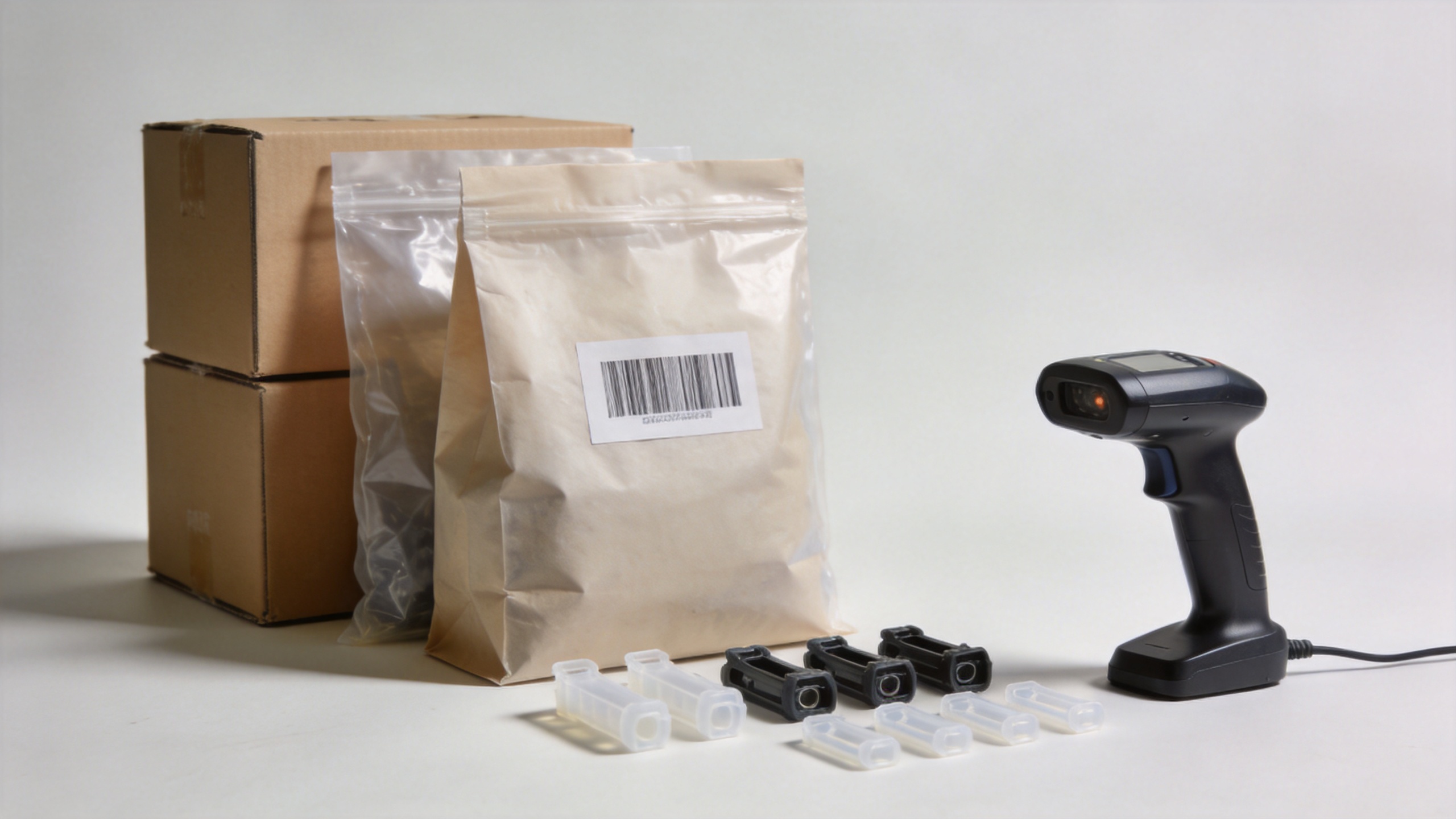
Why custom barcode polybags work well in wholesale distribution
Polybag packaging is often a sensible format when the buyer’s priority is compact storage, flexible pack quantities, or efficient handling of many small parts. A transparent bag lets staff visually inspect the contents while a label provides the more precise identification that appearance alone cannot supply. That combination is useful where several Plastic Fastener profiles look alike but serve different panel holes, trim positions, or repair applications.
Receiving and stock placement can become more consistent
At goods-in, an order team may need to compare the purchase order, carton marking, and physical stock. A barcode-ready label gives the buyer a defined item reference to scan or record, provided the buyer and supplier have agreed on the data format. Warehouse barcode identification is commonly used to support inventory-level and location information. In practical terms, the label can reduce ambiguity between one bag of a Plastic Fastener and another bag that differs only in profile or count; it should not be presented as a substitute for the buyer’s own verification process.
Small packs support clearer replenishment choices
A distributor may stock the same part for workshop customers, online listings, and retail counters. A labeled polybag can help separate these inventory flows while keeping the product compact. Before choosing the format, buyers can ask for the proposed pack quantity, the intended barcode placement, readable item wording, lot or batch fields if required, and a carton-to-inner-pack relationship. These are modest details, yet they can matter more than a generic packaging description when staff must replenish a shelf quickly.
Custom information is more useful than generic decoration
Branding or a custom label may be considered for channel consistency, but the operational fields deserve priority. A useful pack concept starts with the SKU, quantity, unit description, and buyer-approved identifier. Artwork, color, and logo placement can follow after those essentials are settled. If custom requirements include a private label, language version, or retailer data field, share the artwork, market requirements, and packaging hierarchy early so feasibility can be assessed rather than assumed.
Where blister packs can add a different kind of value
Blister packs are generally more visible at the point of sale. For a buyer preparing a Custom Blister Pack Automotive Retainers range, the package can provide a front-facing product view and a printed area for the product name, pack count, fitment notes, and basic selection guidance. This may help a store customer compare an item without opening the pack, while a reseller gains a unit that is easier to display and photograph for a catalog.
That does not mean a blister pack is automatically appropriate for every Plastic Fastener. It can take more storage volume than a simple bag, and the chosen pack must suit the target channel, the quantity customers expect, and the level of information available. A retailer may value a visible, self-contained unit; a workshop distributor may value a compact bag with clear shelf identification. The purchase decision should reflect that difference.
| Decision point | Barcode polybag | Blister pack |
|---|---|---|
| Primary handling value | Compact storage and unit identification | Visible display and consumer-facing information |
| Useful confirmation fields | SKU, quantity, barcode, inner-pack relationship | SKU, quantity, product description, display-facing copy |
| Typical buyer question | How will staff receive and replenish this pack? | How will customers recognize and compare this item? |
| Before approval | Confirm label data and scan workflow | Confirm artwork, visibility, and retail pack expectations |
Build a release sheet for every Plastic Fastener packaging option
Before approving artwork, create one release sheet for each Plastic Fastener selling unit. For a Wholesale Plastic Fastener Assortment, the sheet can state the assortment name, part-family list, quantity basis, package level, and barcode ownership. For Custom Blister Pack Automotive Retainers, it can also state the front-card wording, visible count, retailer reference, and required language version. This keeps a product record, a packaging record, and a carton record from being treated as the same thing.
| Release-sheet field | Why it matters for a Plastic Fastener order | Format where it is most useful |
|---|---|---|
| SKU and plain-language item name | Distinguishes similar Plastic Fastener profiles in receiving and listings. | Both formats |
| Pack count and count basis | Lets a Wholesale Plastic Fastener Assortment be checked as a defined sales unit. | Polybag, carton, and assortment label |
| Barcode owner and encoded level | Clarifies whether a scan identifies a blister unit, a bag, or a carton. | Both formats |
| Display-facing product wording | Gives Custom Blister Pack Automotive Retainers a clearer shelf and catalog identity. | Blister pack |
| Proof-approval reference | Connects the Plastic Fastener package to the buyer-approved label or artwork version. | Both formats |
Use packaging to reduce total communication cost, not merely unit cost
A low packaging cost can look attractive in isolation, but wholesalers also absorb the cost of unclear receiving, mismatched listing data, relabeling, and customer questions. For a Plastic Fastener program, the better comparison includes the information needed after the package leaves the supplier. If a buyer cannot tell what a bag contains from the label, the apparent saving may shift work to the warehouse or sales team.
There is a useful distinction here. Packaging cannot confirm vehicle compatibility by itself, and a barcode cannot establish that a retainer fits a particular vehicle. The package should instead make the product and pack unit traceable to the approved specifications, catalog record, or fitment information. In other words, it supports the decision path; it does not make an unverified compatibility claim.
A practical approval checklist for wholesale fastener packaging
- Define the sales unit. Confirm whether the item will be sold as an individual style, a fixed pack, or a mixed assortment.
- List the identification fields. Agree on SKU, product description, quantity, barcode format, language, and any buyer-required reference fields.
- Map the packaging hierarchy. State how an inner bag or blister unit relates to an outer carton and shipping label.
- Match format to channel. Use a compact, scannable bag when storage and replenishment lead; consider a display-ready blister format when retail presentation and product visibility matter.
- Review a sample or proof. Check artwork, pack count, label readability, and the relationship between the physical item and its product record before broader rollout.
For wholesale distribution, custom packaging is most valuable when it removes uncertainty at the points where people touch the product: receiving, shelving, listing, picking, and resale. A well-defined Plastic Fastener package does not need exaggerated claims. It needs the right information in the right format for the next handler. If you are planning a mixed fastener range, begin with the sales unit and data fields, then choose the polybag or blister presentation that supports that workflow.
 Hot News




