EN

How Does a Snap-In U-Nut and Metal-Plastic Hybrid Fastener Clip Enhance Mounting Strength?
A Fastener Clip is easy to treat as a small, interchangeable part. In automotive trim, shields, brackets, and service panels, that assumption can create a weak mounting plan. A snap-in U-nut and a metal-plastic hybrid Fastener Clip address different parts of the Fastener Clip joint: the metal element can provide a retained thread path, while the plastic element can locate, space, guide, or retain the assembly. Fastener Clip mounting strength comes from the complete joint, not from the visible clip alone.
From an installation and fitment-check perspective, the first Fastener Clip task is to identify the panel edge or hole, the panel thickness, the mating screw, and the direction of service load. Once those conditions are known, a Fastener Clip can be assessed as a system rather than as a generic replacement part. This is especially relevant when comparing a Snap-In U-Nut Fastener Clip with a Metal-Plastic Hybrid Automotive Retainer.
What a Snap-In U-Nut Changes in the Mounting Path
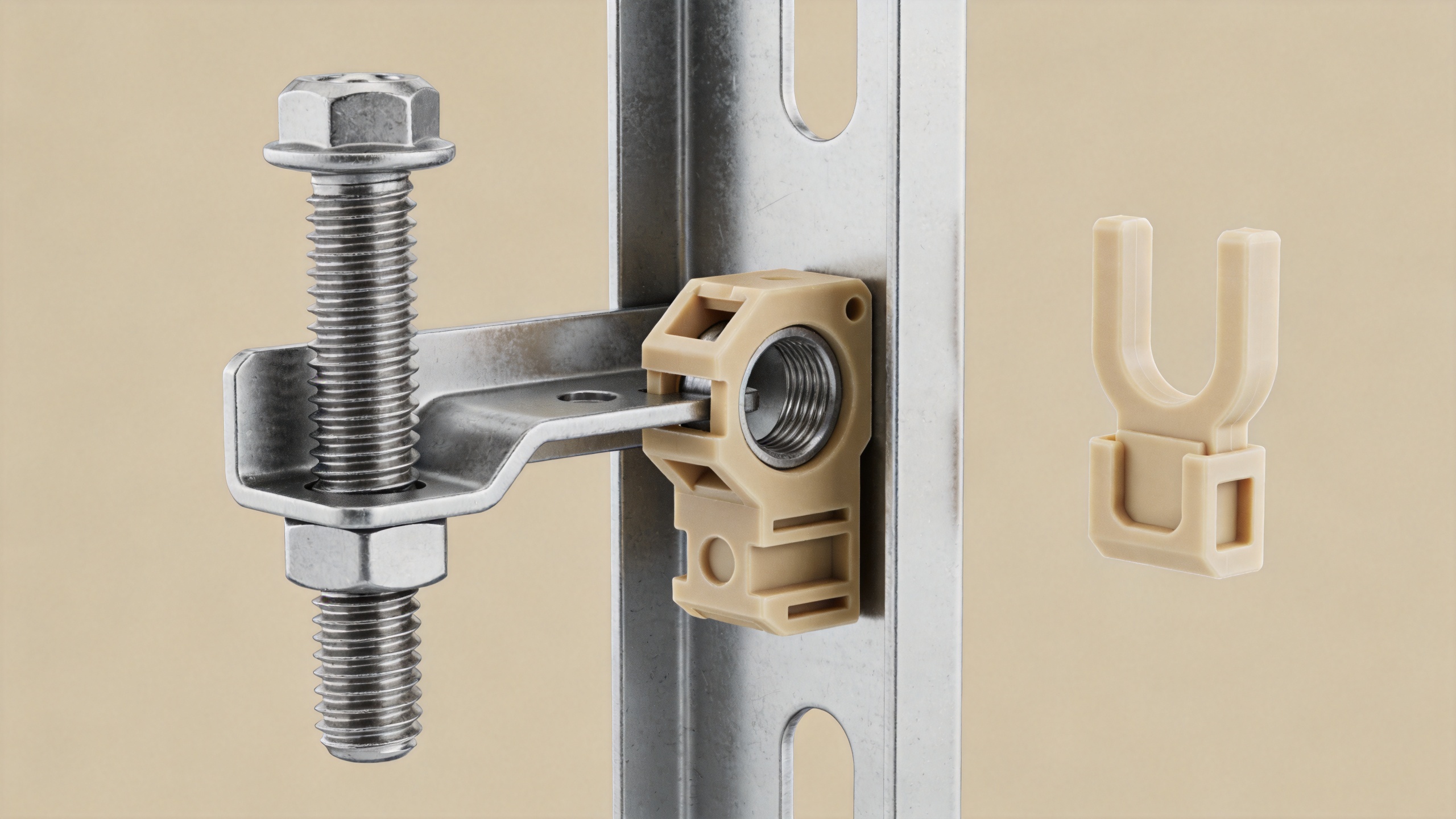
For a Fastener Clip installation, a U-nut, also called a clip-on or speed nut, is generally designed to slide over a sheet-metal edge and stay in position before a mating screw is installed. That retained position matters because it creates a threaded location without requiring access behind the panel for a separate loose nut. When the screw enters the aligned opening, the joint can clamp the mounted component to the panel through the U-nut’s threaded section.
For a Fastener Clip application, this Fastener Clip design changes the assembly sequence in a practical way. The installer can position the U-nut first, align the part, and then introduce the screw from the accessible side. The clip’s spring action may help keep the nut from dropping during handling, but it should not be confused with a universal load rating. Actual Fastener Clip clamp performance depends on the U-nut design, metal thickness, thread form, screw engagement, panel condition, and the load applied to the finished assembly.
Why a Metal-Plastic Hybrid Design Can Be Useful
A metal-plastic hybrid Fastener Clip usually assigns different jobs to different materials. The metal portion can be used where thread engagement, spring retention, or resistance to deformation is needed. A plastic body can support locating features, trim-facing geometry, reduced rattle, controlled spacing, or a shape that protects adjacent surfaces during installation. The value of the Fastener Clip is not that either material is automatically stronger; the value is that the design can place each material where its function is appropriate.
For example, a plastic guide can help a Fastener Clip enter a prepared hole or sit against a trim feature, while the metal U-nut provides the threaded connection for the screw. This Fastener Clip division can reduce alignment uncertainty during assembly. It can also make service work more manageable when access is limited. Still, the plastic portion must match the panel opening, local temperature exposure, surrounding clearance, and removal method. A hybrid part that fits loosely or is forced into the wrong opening cannot compensate for an otherwise sound metal thread path.
Where Mounting Strength Actually Comes From
It is useful to separate Fastener Clip mounting strength into several checks rather than attach it to a single marketing term:
- Panel engagement: The U-nut must sit on an edge or feature with the intended thickness and profile. If the panel is too thin, too thick, bent, or damaged, retention and alignment can change.
- Thread engagement: The Fastener Clip screw diameter, pitch or thread-form compatibility, and usable engagement length should correspond to the selected Fastener Clip. Starting a screw at an angle can damage threads or pull the assembly out of alignment.
- Clamp path: The screw head, mounted part, Fastener Clip, and panel need to form a stable compression path. A large gap, soft intermediate layer, or distorted bracket can reduce the consistency of that clamp.
- Load direction: Pull, shear, vibration, and repeated service loads do not act in the same direction. The assembly should be evaluated according to how the mounted component is actually loaded.
- Locator fit: On a Metal-Plastic Hybrid Automotive Retainer, the plastic locating features need to match the opening and surrounding geometry rather than merely resemble the original part.
In other words, a Fastener Clip contributes to a stronger mounting arrangement when its geometry creates repeatable positioning and its threaded or retaining features match the rest of the joint. It does not make an incorrect screw, damaged panel, or unsupported component suitable by itself.
Metal Support and Plastic Location: A Practical Comparison
| Design element | Typical job in the assembly | What to verify |
|---|---|---|
| U-nut or metal clip section | Retains a threaded location and supports screw-driven clamping | Panel thickness, edge access, thread type, screw alignment |
| Plastic body or guide | Locates the clip, manages spacing, and meets the trim geometry | Hole profile, leg spacing, clearance, removal direction |
| Mating screw | Creates the final clamp between component and panel | Diameter, thread compatibility, head style, engagement condition |
| Mounted part | Transfers service load into the joint | Load direction, bracket flatness, vibration exposure, access for service |
This comparison is why visual similarity is not enough. A Fastener Clip can look close to another clip while using a different panel range, screw connection, or locator geometry. Before classifying a Fastener Clip part as a direct replacement, compare the physical dimensions and mounting conditions with the intended assembly.
Installation Checks Before Tightening the Screw
- Identify whether the Fastener Clip joint needs a U-nut on a panel edge, a push-in retainer in a hole, or a hybrid design combining both functions.
- Measure or verify the Fastener Clip panel thickness and the opening, including any flange, paint buildup, deformation, or restricted access.
- Confirm the mating screw specification and start it squarely. Do not force a screw into a Fastener Clip if the thread path feels misaligned.
- Seat the plastic locator fully only when its legs, tabs, or shoulders match the intended feature. Forcing the plastic body can create hidden stress or poor panel contact.
- After Fastener Clip assembly, inspect the mounted part for rocking, gaps, interference, or movement in the expected load direction.
For batch Fastener Clip sourcing, it is sensible to record these checks in a part-identification sheet: panel thickness range, opening dimensions, clip orientation, screw details, and installation location. That information is often more useful than a broad “universal” label when comparing a Fastener Clip assortment.
When to Choose a Hybrid Fastener Clip
A hybrid Fastener Clip design may be worth evaluating when the assembly needs both a repeatable trim-facing locator and a retained metal thread connection. It can be relevant for panels or brackets where a loose nut is difficult to hold, where a component must be aligned before screw installation, or where the Fastener Clip mounting location needs a carefully shaped contact feature. The appropriate choice remains conditional: the exact product drawing, material specification, panel condition, screw, and service environment should be checked before final selection.
Yiwu Shengying Auto Accessory Co., Ltd. serves automotive-parts buyers who need to compare small components by practical fitment information. For a Fastener Clip inquiry, provide the vehicle application, installation position, panel thickness, opening or edge dimensions, a photo of the mating screw, and the required quantity. Those details make it possible to evaluate whether a snap-in U-nut or a metal-plastic hybrid configuration is suitable for the mounting task.
Conclusion: Strength Starts With a Matched Joint
A snap-in U-nut can create a retained screw location, while a metal-plastic hybrid Fastener Clip can combine that threaded function with controlled locating and trim-facing geometry. The practical advantage is a more organized mounting path, not an automatic strength claim. Check the panel, clip geometry, thread connection, screw, load direction, and removal access together. With those items confirmed, a Fastener Clip can support a secure, serviceable mounting solution that fits the real assembly conditions.
 Hot News