EN

How Can B2B Buyers Consolidate Multi-Category Motorcycle Accessories to Save on Freight Costs?
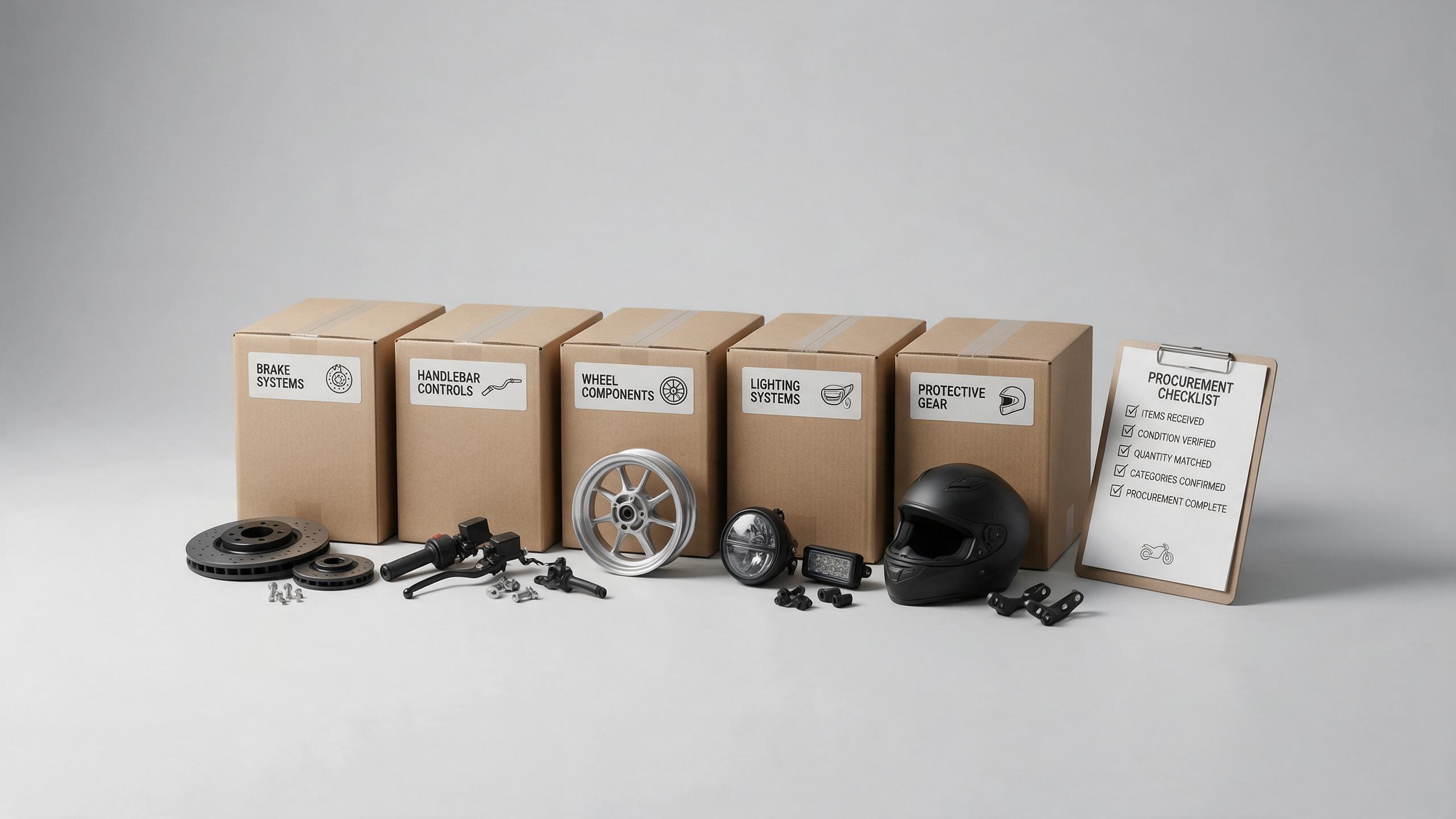
For a wholesaler, distributor, or online retailer, buying Motorcycle Accessories from several product categories can make a catalog more useful while making shipping harder to control. A carton of lighting items, a group of grips, mounting pieces, and small replacement components may each look manageable on its own. Shipped separately, however, they can create repeated pickup, handling, paperwork, and destination coordination. The practical question is not simply whether to buy more Motorcycle Accessories. It is whether the purchase order can be planned as one freight-ready program.
This is a buyer-side guide, not a freight quote. Actual freight outcomes depend on origin, destination, cargo dimensions, weight, transport terms, customs requirements, and local charges. Still, a disciplined Wholesale Motorcycle Accessories Consolidation process can help a buying team compare total landed-cost scenarios before goods are released.
Start With the Cost You Are Trying to Control
Unit price matters, but it is only one part of a multi-category order. Separate shipments can multiply events around the shipment: supplier handoff, warehouse receiving, document review, origin handling, destination handling, and local delivery coordination. A lower-priced line of Motorcycle Accessories may not remain the lower-cost choice if it causes a separate freight movement or delays the release of other ready goods.
Begin with a simple cost map for every product group. Record product value, quantity, carton count, gross weight, carton dimensions, production-ready date, pickup location, and any special handling information. Then ask which cost is per shipment, which cost is per carton or volume, and which cost is caused by a late or incomplete document. This makes the conversation about Motorcycle Accessories more useful than a broad request for a lower freight rate.
Build One Consolidation Sheet Before Placing Orders
A shared consolidation sheet is the operating document for Bulk Moto Parts Sourcing. It should use one row per SKU or carton group and one agreed unit of measure. For each line, include:
- accessory category and SKU reference;
- quantity per carton and total carton count;
- carton length, width, height, and gross weight;
- production completion date and latest acceptable pickup date;
- supplier contact and pickup address;
- packing-list status, invoice status, and product description status;
- any compatibility, electrical, or installation information that must remain attached to the SKU record.
This detail matters because Motorcycle Accessories often combine compact small parts with bulkier items. A purchase team cannot make a sound consolidation decision from item count alone. Carton geometry, weight distribution, and readiness dates shape both the freight plan and the risk of leaving one category behind.
Group Categories by Readiness, Not Just by Product Family
It is tempting to place all Motorcycle Accessories from one supplier in a single release and all items from another supplier in a later release. That approach may be convenient, but it can miss consolidation opportunities. Instead, create three operational groups: goods ready now, goods likely ready within the planned consolidation window, and goods with uncertain completion dates.
The first group becomes the freight baseline. The second group deserves a clear decision deadline: wait and consolidate, or release the ready goods. The third group should not quietly hold the entire order hostage. A useful review question is: what additional freight and handling will a split shipment create, and what inventory or sales effect will waiting create? The answer will differ for each mix of Motorcycle Accessories, so avoid treating a fixed volume threshold as universal.
Compare Shipment Options Using Total Landed Cost
For many routes, shared-container shipping and full-container shipping use different cost structures. Shared shipments can suit smaller cargo volumes, while a dedicated container can become more practical as volume, handling needs, and shipment coordination change. The crossover is route-specific. It should be quoted for the actual shipment, not assumed from a generic rule.
Ask the forwarder to compare consistent scenarios for the same consolidated list of Motorcycle Accessories: one combined shared shipment, one dedicated-container option if relevant, and a split-release option. Request that the quote identifies origin charges, main freight, destination handling, customs-related service charges where applicable, delivery, and any warehouse receiving or consolidation fee. Comparing only the ocean or air line item can hide the cost created by multiple small movements.
| Decision question | Why it matters for Motorcycle Accessories |
|---|---|
| Are carton dimensions confirmed? | Volume and stacking assumptions can change after packaging is finalized. |
| Can all suppliers meet one cutoff? | A missed cutoff can convert a consolidation plan into multiple releases. |
| Are documents aligned? | Inconsistent descriptions or quantities can add avoidable review work. |
| Does the destination need staged delivery? | A consolidated arrival still needs a practical receiving plan. |
Set Packaging Rules That Help the Shipment Work
Packaging is part of the freight decision, not an afterthought. Before confirming a Wholesale Motorcycle Accessories Consolidation plan, ask suppliers to provide carton specifications on the same template and identify mixed-carton limits. Small parts, fragile lighting-related items, and products with different packing needs may require separate protection even when they travel in one consolidated shipment.
The objective is not to force unrelated items into the same carton. It is to make the outer-carton data consistent enough for a consolidator to plan receiving, measurement, labeling, and loading. For Motorcycle Accessories, clear carton marks and SKU-level packing lists also help the buyer separate inventory correctly after arrival.
Coordinate Documents Before Cargo Reaches the Warehouse
Freight savings can disappear when documents arrive late or describe products differently from the packing list. Assign one owner for the master purchase-order list and give every supplier the same document deadline. Product descriptions for Motorcycle Accessories should be accurate and consistent across the commercial invoice, packing list, labels, and any shipment instructions. If a product has fitment, power, or installation conditions, retain that information in the internal SKU record rather than turning a freight document into a product claim.
Before pickup, reconcile carton counts, weights, dimensions, invoice values, and supplier-ready dates against the consolidation sheet. This is a short step, but it helps reveal whether one late or incomplete category will change the freight plan.
Use a Release Rule Instead of Waiting Indefinitely
A consolidation window needs a release rule. For example, the buyer can define a target pickup date, a final date for late categories, and the person authorized to approve a split shipment. That rule converts a vague promise to “wait for the other Motorcycle Accessories” into a controlled decision.
Compare the incremental freight and handling of releasing ready cargo now with the inventory, cash-flow, and customer-service impact of waiting. If the late items are small but essential to a selling bundle, waiting may be reasonable. If they are uncertain and the ready lines are needed for replenishment, a split may be the lower total-cost option. The right result comes from the documented trade-off, not from an assumption that consolidation will save money in every scenario.
A Repeatable Buyer Workflow
- Map planned Motorcycle Accessories by SKU, supplier, carton data, and ready date.
- Standardize packing and document templates before production is complete.
- Choose a consolidation window and a final release decision date.
- Obtain comparable quotes for combined and split shipment scenarios.
- Review freight, handling, destination, and inventory effects together.
- Confirm pickup, carton marks, documents, and receiving instructions.
- After arrival, record what caused extra cost or delay and update the next order template.
What to Send With a Consolidation Inquiry
A forwarder or supplier can give a more useful response when the inquiry includes the consolidation sheet, pickup locations, tentative ready dates, carton specifications, destination, and preferred delivery timing. For Bulk Moto Parts Sourcing, also state whether partial release is acceptable and who can approve a change. If any information is still estimated, label it as estimated. That transparency is more helpful than presenting early carton figures as final.
Multi-category Motorcycle Accessories purchasing works better when procurement, packaging, and freight decisions use the same information. Start by consolidating the data, then consolidate the cargo only when the cost, timing, and receiving plan support it.

 Hot News