
 EN

How Does Built-In Low-Voltage Protection Prevent Motorcycle Heated Grips from Draining the Battery?
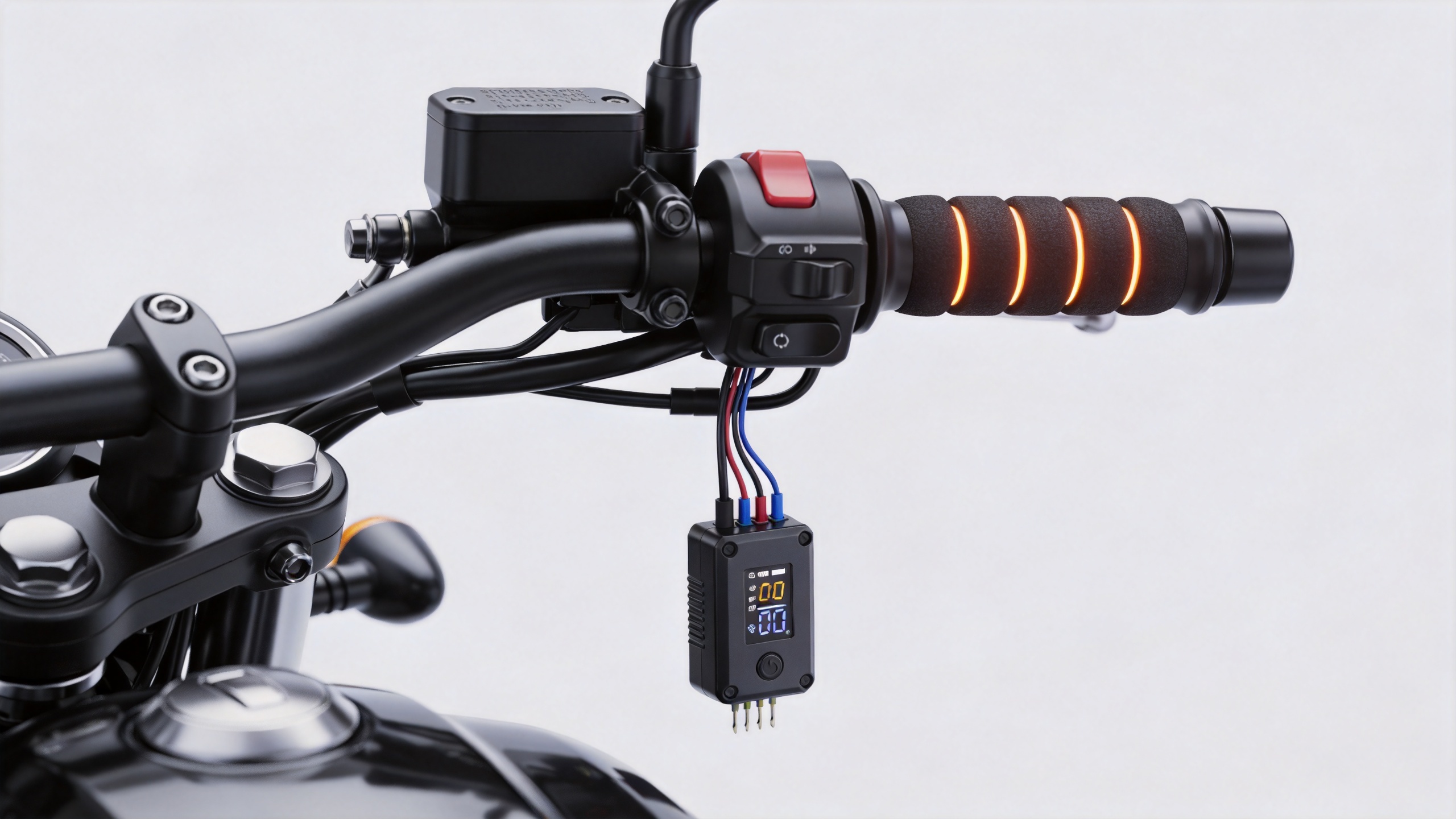
Motorcycle Heated Grips can make cold rides more manageable, but they also add an electrical load that deserves the same planning as any other accessory. A controller with low-voltage protection is designed to watch system voltage while Motorcycle Heated Grips are operating. If voltage falls below that controller’s programmed threshold, it reduces or switches off heat so more battery reserve remains available for starting. That is useful protection, but it is not a substitute for sound wiring, a healthy battery, or a charging-system check.
For a buyer, installer, or parts reseller, the practical question is not simply whether Motorcycle Heated Grips have a cutoff. It is whether the controller, battery type, charging output, fuse path, and intended riding pattern work together. The exact cutoff point and restart behavior must come from the instructions for the specific grip set; they are not universal across Motorcycle Heated Grips.
What low-voltage protection monitors
Most protected Motorcycle Heated Grips use a controller that samples voltage at the electrical connection. When the engine is running and the charging system is supplying enough current, the controller permits the selected heat level. When voltage drops into its protection zone, it can turn the heating circuit off or limit operation. This helps avoid leaving an accessory drawing power until the motorcycle has too little reserve for a reliable start.
The important distinction is that the controller sees a voltage condition, not every cause behind it. Low voltage can reflect extended idling, short trips, a battery that needs charging, corroded terminals, an underperforming charging system, or a load greater than the bike can support at that moment. Motorcycle Heated Grips with a cutoff respond to the symptom; they do not diagnose or repair the cause.
Why a cutoff can protect starting reserve
A conventional 12-volt motorcycle battery can lose usable starting margin when accessories continue drawing power after the charging system is not keeping up. Low-Voltage Protection Heated Grips are intended to interrupt that accessory draw before the voltage condition becomes more severe. In simple terms, the controller gives starting priority over grip heat when the electrical system is under strain.
This is especially relevant in stop-and-go traffic, during long idle periods, or on motorcycles whose charging output at low engine speed is limited. Motorcycle Heated Grips may be operating normally on an open-road ride and then reach a cutoff condition in slow traffic. That change does not automatically mean the grips are defective. It can be a useful prompt to check the electrical conditions in which they are being used.
The cutoff value is not a universal battery-health number
It is tempting to treat one voltage number as a pass-or-fail answer. That approach is too simple. Resting voltage, voltage under load, charging voltage, battery age, temperature, and battery chemistry all affect interpretation. Published battery guidance commonly places a fully charged lead-acid motorcycle battery around the upper 12-volt range at rest, while lithium motorcycle batteries can show higher resting voltage. Motorcycle Heated Grips should therefore use the cutoff logic specified for their own controller and intended battery system.
Battery-Safe Motorcycle Hand Warmers are often described with a protective feature, but the description should be read as a controller function rather than a promise that any battery will remain healthy. If a motorcycle repeatedly reaches the cutoff during ordinary riding, test the battery and charging system according to the motorcycle and battery manufacturers’ procedures. Professional electrical assistance is sensible where readings or wiring condition are uncertain.
Correct wiring still matters
Low-voltage protection works more predictably when Motorcycle Heated Grips are connected as the instructions require. Many installations use a fused, ignition-switched supply or a relay-controlled circuit so the grips do not remain powered after the motorcycle is turned off. The controller may add another layer of protection, but it does not make a continuously live, unfused, or poorly terminated connection acceptable.
- Confirm whether the Motorcycle Heated Grips are specified for the motorcycle’s voltage system.
- Use the fuse rating, wire routing, connector method, and switching arrangement in the product instructions.
- Keep wiring clear of steering movement, heat sources, abrasive edges, and pinch points.
- Check battery terminals, ground connections, and charging-system condition before blaming the grips.
- Do not substitute a cutoff setting from another controller or another battery chemistry.
For installers, this is where the difference between a feature list and a workable system becomes clear. Motorcycle Heated Grips can have useful voltage protection, yet a loose connection or an undersized charging system can still create trouble. Verify the whole circuit before returning the motorcycle to service.
How the feature behaves in real use
During a ride with stable charging voltage, Motorcycle Heated Grips normally follow the selected heat setting. If voltage falls, the controller may switch heat off, flash an indicator, or require a restart after voltage recovers. The exact response varies by design. Riders should not assume that every controller restarts automatically, or that a controller will behave the same after the engine is shut down.
In other words, Low-Voltage Protection Heated Grips manage an accessory load; they do not create electrical capacity. If other loads such as lighting, heated clothing, or charging devices are in use, the combined demand matters. Planning the accessory load as a system is more useful than judging Motorcycle Heated Grips in isolation.
A verification checklist before fitting or stocking
- Identify the motorcycle voltage system and installed battery chemistry.
- Read the controller documentation for its cutoff and recovery behavior.
- Confirm handlebar diameter, throttle-side fitment, cable routing, and switch location separately from the electrical review.
- Check whether the Motorcycle Heated Grips call for a relay, ignition-switched lead, or a direct fused connection.
- Measure or have a technician assess battery and charging-system condition if the motorcycle has starting or charging symptoms.
- For wholesale or retail listings, present Battery-Safe Motorcycle Hand Warmers with the required fitment and installation questions rather than implying universal compatibility.
Low-voltage protection is a safeguard, not a repair
Built-in protection gives Motorcycle Heated Grips a sensible response when system voltage drops: it removes or reduces an accessory load to retain more starting reserve. That can be valuable on a correctly installed, properly maintained motorcycle. Still, the feature cannot compensate for an aging battery, an electrical fault, incorrect wiring, or accessories that collectively exceed available charging capacity.
When comparing Motorcycle Heated Grips, ask for the actual installation guide and controller behavior, then confirm the motorcycle’s battery, charging conditions, and handlebar fitment. That practical review helps riders and sellers describe Low-Voltage Protection Heated Grips accurately: as a useful electrical safeguard with clear operating limits.
 Hot News




