EN

Can a Direct Fastener Clip Manufacturer Provide Free Samples for Fitment Testing?
For a buyer replacing trim, bumper, splash-shield, or interior-panel retainers, a Fastener Clip sample can be more useful than another catalog photo. A direct supplier may be willing to support fitment testing with samples, but the word “free” needs clarification before anyone assumes it is an order term. The supplier may set conditions around sample quantity, freight, available stock, tooling, destination, and later order value. Those details should be confirmed in writing for the specific Fastener Clip request.
From a wholesale purchasing perspective, the real question is not simply whether a sample costs nothing. It is whether the sample lets the buyer make a sound decision before committing to a larger Fastener Clip order. A practical request gives the supplier enough information to identify a candidate part and gives the buyer a repeatable way to compare it with the vehicle’s original retainer.
What “free samples” can mean in a Fastener Clip inquiry
A Direct Fastener Clip Manufacturer may describe a sample program in several ways: an in-stock piece supplied without a unit charge, a small evaluation pack, a sample charge credited against a later order, or a paid sample shipment. None of those arrangements should be assumed from the phrase alone. Freight, courier charges, taxes, packaging, and the maximum number of parts may be handled separately.
Ask the supplier to state five points clearly: whether the requested Fastener Clip is available from stock; the number of pieces included; the part and shipping charges; the dispatch timing; and whether any amount can be credited after an approved production order. A Free Sample Automotive Retainer Factory request is more useful when it asks for those terms rather than asking only for “free samples.”
It also helps to distinguish an existing catalog part from a new design. A stocked Fastener Clip can be evaluated as an existing item. If the request involves a new mold, a special material, a color match, or a changed geometry, sample terms may require a separate technical and commercial discussion. This is not a negative signal; it is simply information that should remain visible while the buyer evaluates the project.
Why fitment testing matters before a bulk Fastener Clip order
Automotive retainers can look alike while differing in the features that control installation. General industry guidance on trim fasteners emphasizes matching the mounting-hole diameter and depth, while supplier catalogs commonly separate clips by head size, stem diameter, and stem length. Panel orientation and panel thickness can also change how a Fastener Clip sits and holds. A photo alone cannot settle those questions.
For that reason, a sample should be treated as a comparison tool rather than proof that every vehicle application is covered. If the vehicle has different model years, trim levels, panel materials, or mounting locations, test each relevant location. A clip that appears acceptable in one hole may not be suitable for another one nearby.
Send this information with a sample request
A supplier can usually respond more precisely when the inquiry describes the mounting condition rather than only naming a vehicle. Before contacting a Direct Fastener Clip Manufacturer, prepare the following:
- Vehicle make, model, year, and the exact panel or component location.
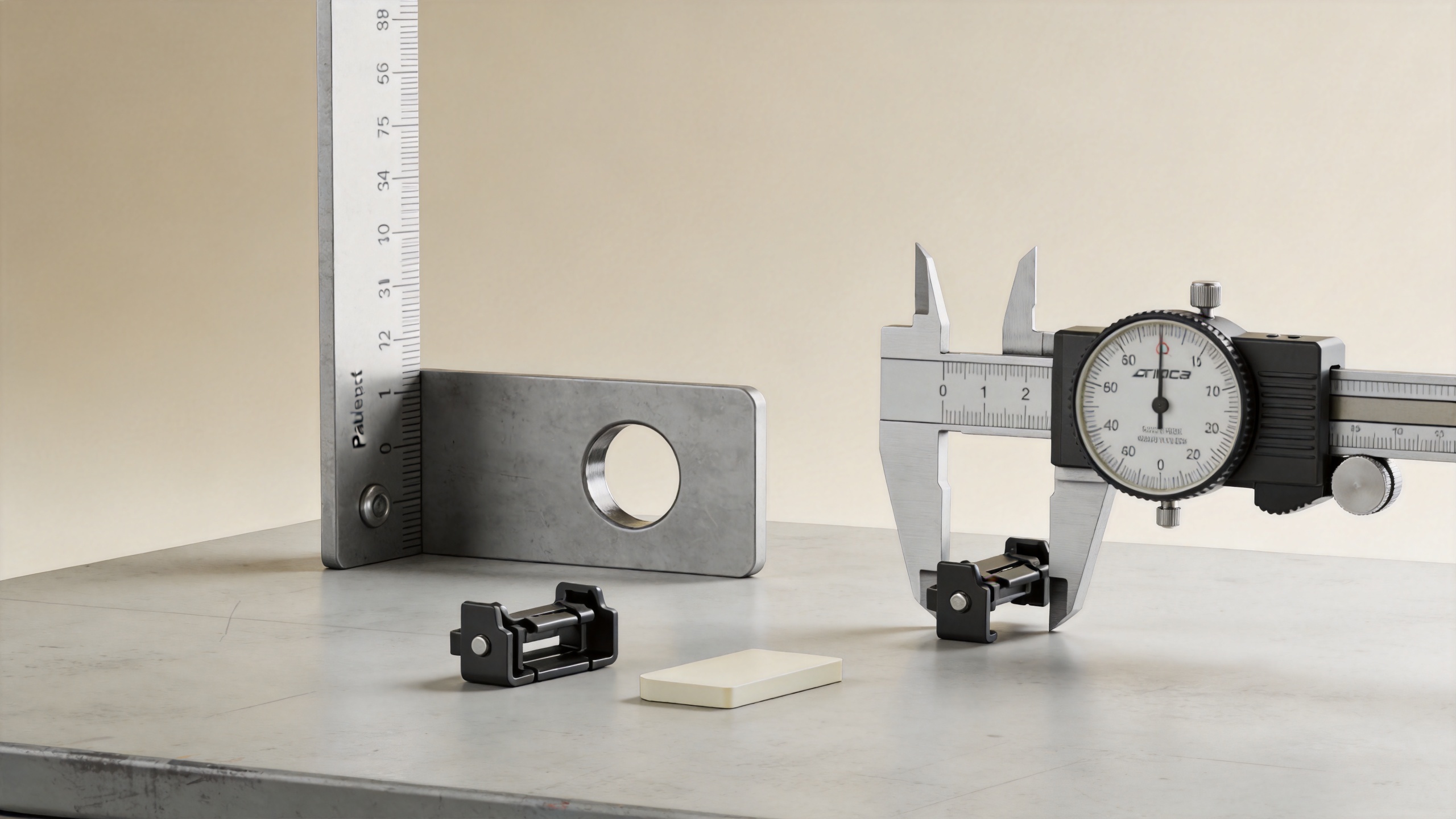
- Clear photos of the original Fastener Clip from the top, side, and underside, plus a photo of the installed location.
- Measured hole diameter and, where accessible, mounting-hole depth.
- Panel thickness, material, and whether the clip enters a round hole, slot, stud, or another receiver.
- Original clip head diameter, stem diameter, stem length, and any washer, seal, or secondary locking feature.
- The expected pull direction, service access, and whether the panel will be removed repeatedly.
- Sample quantity, destination country, courier preference, and the projected order quantity if fitment is approved.
Measurements do not need to be presented as laboratory results. A clear ruler photo and a short list of observed dimensions can be enough to start a useful conversation. If a dimension is uncertain, say so. It is better to mark a point for confirmation than to turn an estimate into a specification.
A simple Fastener Clip fitment test sequence
Use an anonymous test scenario: a distributor has a removed trim panel and several visually similar retainers. Instead of selecting a clip by color or head shape, the team requests a small group of candidates and records the result of each installation. This is a reusable process, not a customer case.
- Identify the original part. Label the removed Fastener Clip, its location, and any visible part marking before comparing it with a sample.
- Compare dimensions. Check hole size, panel thickness, head coverage, stem geometry, engagement length, and any seal or washer against the candidate.
- Test installation direction. Insert the sample without forcing it. Note whether the legs compress as intended and whether nearby parts limit access.
- Reassemble the panel. Check alignment, gap consistency, and whether the panel can be seated without unusual force. Do not treat a forced installation as a successful result.
- Check service removal. If normal maintenance requires removal, use an appropriate trim tool and note whether the Fastener Clip or surrounding panel shows damage.
- Record the outcome. Keep photos, measurements, candidate part numbers, quantity tested, and any unresolved issue with the purchasing record.
Where the mounting point is difficult to inspect or the part affects a safety-related assembly, a qualified technician or the vehicle documentation should guide the evaluation. A replacement Fastener Clip should not be assumed to meet an application requirement solely because it can be inserted.
Questions to settle before approving a supplier
Fitment is only one part of an order decision. Before a bulk purchase, ask the Direct Fastener Clip Manufacturer to identify the quoted material, part number, packaging method, minimum order quantity, and any available drawing or dimensional reference. If an assortment contains multiple Fastener Clip profiles, request a part-number-to-photo or part-number-to-dimension map so warehouse and retail teams can keep them separate.
For a Free Sample Automotive Retainer Factory inquiry, also confirm whether the sample comes from the same production configuration proposed for the order. If the supplier cannot confirm that point yet, record it as pending rather than extending the sample result to a future batch. The same discipline applies to packaging and labels: clarify what is included in the sample shipment and what must be specified later.
Turn the sample result into a clearer procurement decision
A direct manufacturer can potentially provide samples, but availability and terms are supplier-specific. The buyer’s strongest next step is to submit vehicle and mounting data, ask for the exact sample conditions, compare the candidate Fastener Clip against the original part, and document the result before placing a bulk order. That sequence helps a wholesaler, repair-focused retailer, or online seller move from a broad product term to a purchase decision supported by actual fitment evidence.
In short, ask for a sample, but also ask what must be confirmed. With hole dimensions, panel conditions, original-part photos, shipping terms, and a defined test record, the sample conversation becomes a more useful foundation for sourcing the right Fastener Clip.
 Hot News