
 EN
EN
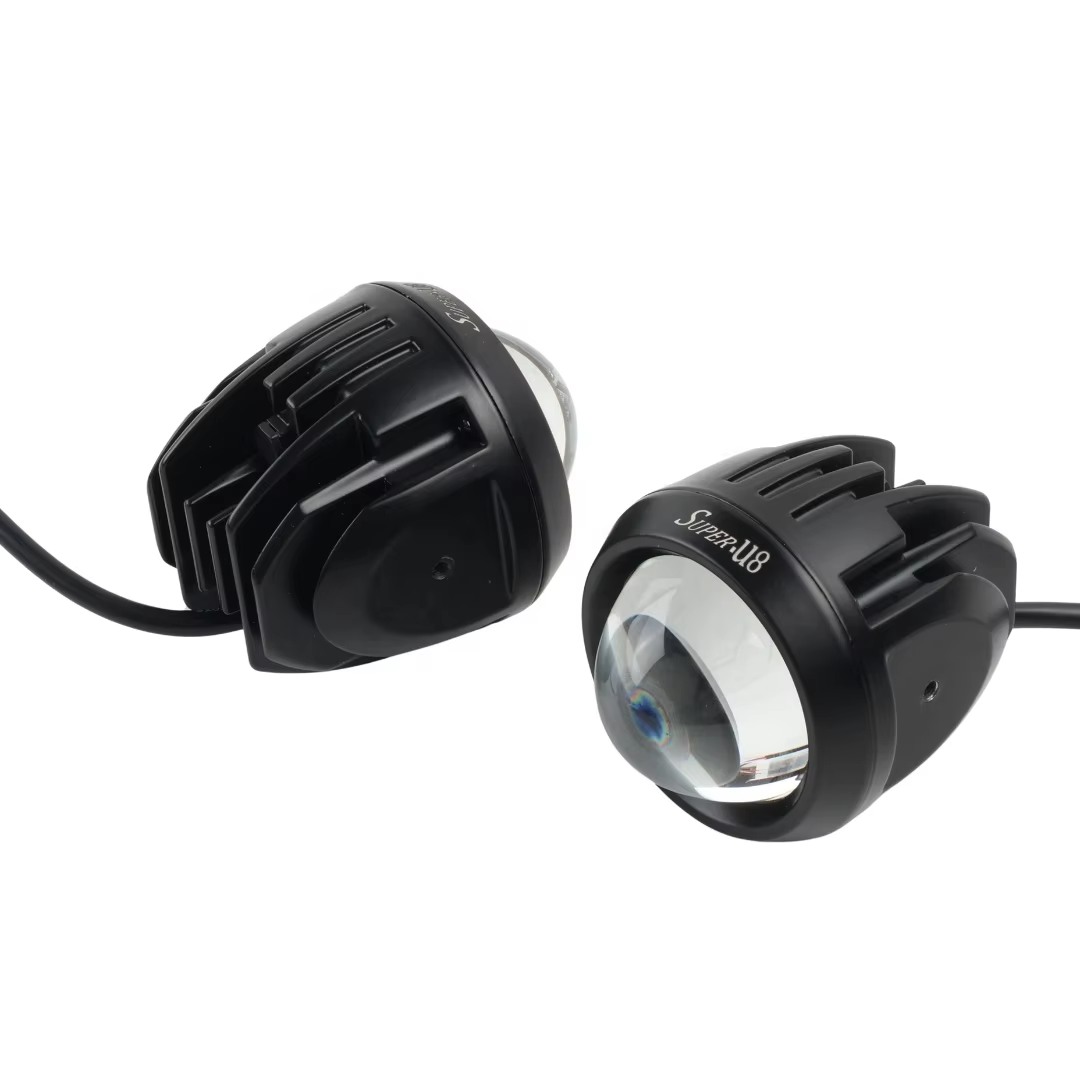
Core Durability Requirements for Long-Distance Motorcycle Auxiliary Fog Lights
Long-distance riders demand motorcycle auxiliary fog lights that endure brutal conditions. Unlike standard options, these lights face sustained vibration, weather extremes, and thermal stress over thousands of miles.
Vibration Resistance: Why MIL-STD-810G Certification Ensures Stability on Extended Highway Rides
Constant vibration from rough terrain degrades lighting performance—especially over multi-hour highway stretches. MIL-STD-810G certification validates rigorous mechanical shock and resonance testing, ensuring components withstand frequencies aligned with engine harmonics. This prevents premature failure: vibration accounts for 34% of electrical failures in auxiliary lighting systems (Ponemon Institute, 2023). Sealed connectors and anti-resonance mounting systems preserve beam alignment and structural integrity during extended rides.
Weatherproofing Excellence: Decoding IP68 and IP69K Ratings for Mud, Rain, and High-Pressure Washdowns
True weatherproofing requires precise ingress protection—not just marketing claims. IP ratings define real-world resilience:
| Rating | Dust Protection | Liquid Protection | Ideal Use Case |
|---|---|---|---|
| IP68 | Total | 30min @ 1.5m depth | Heavy rain, river crossings |
| IP69K | Total | 14–16 bar @ 80°C | Pressure washing, muddy terrain |
IP69K-rated units survive direct steam cleaning after off-road immersion—critical for riders who tackle gravel passes or desert washes. Fully sealed optics also prevent internal condensation during rapid temperature swings, such as climbing from humid valleys into cold mountain air.
Thermal Management: How Aluminum Housings and Copper-Core PCBs Preserve LED Output Over 10+ Hour Rides
LED efficiency drops sharply without effective heat dissipation. Aluminum housings conduct heat five times faster than plastic alternatives, while copper-core PCBs rapidly pull junction heat away from emitters. Together, they sustain over 90% lumen output during overnight rides—without fans that risk failure or add complexity. Passive thermal design ensures consistent fog-penetrating performance across long-haul conditions.
Optimized Beam Patterns for Highway-Scale Visibility and Safety
Why Combo Beam Is Superior for Long-Distance Motorcycle Auxiliary Fog Lights in Variable Low-Visibility Conditions
Highway riders encounter rapidly shifting environments—open interstates, winding mountain roads, dense fog, and sudden downpours. A single-beam solution compromises either reach or situational awareness. Combo beam merges a focused spot pattern (projecting up to 500 feet ahead) with a wide flood pattern (illuminating roadside curves and hazards). This dual coverage delivers early threat detection and peripheral context—eliminating the need to swap lights mid-ride. Unlike pure spot beams that leave dangerous dark zones at the edges, or floods that lack forward penetration, combo beam maintains a balanced, usable field of view in all low-visibility scenarios.
Precision Optics: Trioptic™ Lenses and Controlled Cutoffs That Maximize Forward Throw Without Blinding Oncoming Traffic
Raw output is meaningless without optical control. Trioptic™ lenses use multiple focal zones within a single optic to produce a sharp horizontal cutoff—keeping light firmly on the road surface and out of oncoming drivers’ eyes. This precision enables maximum forward throw while complying with safe glare thresholds. It also minimizes backscatter in fog, where unfocused light reflects off moisture and degrades visibility. The result is longer usable range, improved safety, and responsible road presence—turning lumens into actionable vision.
Electrical Integration: Power Compatibility and System Reliability on Extended Rides
Wattage, Amperage, and Alternator Load Management to Prevent Battery Drain During 8–12 Hour Motorcycling Sessions
Electrical compatibility is non-negotiable for long-distance reliability. Calculate total system draw—including auxiliary lights, heated gear, GPS, and comms—and compare it to your motorcycle’s alternator capacity (typically 300W–600W for touring models). For example, dual 40W fog lights draw ~3.3A at 12V; paired with heated gear (5A–10A), this may exceed the output of a 25A alternator. Always maintain at least a 20% power buffer to accommodate voltage sag during night riding, cold starts, or accessory surges. Combine this planning with thermally robust construction—aluminum housings and copper-core PCBs—to ensure stable operation under continuous load.
Trusted Brands and Real-World Performance of Top Motorcycle Auxiliary Fog Lights
Field-Tested Reliability: Denali D4, Baja Designs LP6, Vaishnu V3, and Clearwater EVO2 in 10,000-Mile Rider Logs
When selecting long-distance motorcycle auxiliary fog lights, real-world endurance matters more than spec-sheet promises. Across 10,000 miles of aggregated rider logs—from Alaska Highway slogs to Patagonian dust storms—four models consistently deliver zero-field failures: Denali D4, Baja Designs LP6, Vaishnu V3, and Clearwater EVO2. All maintain full lumen output, lens clarity, and housing integrity despite relentless vibration, thermal cycling, and moisture exposure. The Denali D4’s reinforced mounting architecture and Baja Designs LP6’s impact-resistant polycarbonate lens reflect purpose-built durability. Vaishnu V3 balances cost and longevity without compromise, while Clearwater EVO2 excels at seamless low-beam integration. These are not theoretical benchmarks—they’re proven performers trusted by riders who measure reliability in miles, not minutes.
Frequently Asked Questions (FAQ)
What is MIL-STD-810G certification?
MIL-STD-810G certification is a military-grade standard for validating a product’s durability under extreme mechanical, environmental, and thermal conditions, such as vibrations aligned with engine harmonics, ensuring reliability on long-distance motorcycling routes.
What is the difference between IP68 and IP69K ratings?
IP68 provides protection against total dust ingress and submersion in water up to 1.5m for 30 minutes, while IP69K ensures total dust protection and resistance to high-pressure, high-temperature water sprays, ideal for extreme off-road conditions.
Why is thermal management important for motorcycle auxiliary fog lights?
Thermal management, such as using aluminum housings and copper-core PCBs, prevents overheating and maintains consistent LED performance, ensuring proper illumination over long-hour rides.
What is a combo beam pattern, and why is it preferred?
A combo beam pattern combines a spot beam for long-distance visibility with a flood beam for peripheral illumination, ensuring complete coverage for diverse riding conditions without frequent light adjustments.
Which brands are trusted for long-distance motorcycle auxiliary fog lights?
Denali D4, Baja Designs LP6, Vaishnu V3, and Clearwater EVO2 have been field-tested across thousands of miles and proven to deliver reliable performance under extreme conditions.
Table of Contents
-
Core Durability Requirements for Long-Distance Motorcycle Auxiliary Fog Lights
- Vibration Resistance: Why MIL-STD-810G Certification Ensures Stability on Extended Highway Rides
- Weatherproofing Excellence: Decoding IP68 and IP69K Ratings for Mud, Rain, and High-Pressure Washdowns
- Thermal Management: How Aluminum Housings and Copper-Core PCBs Preserve LED Output Over 10+ Hour Rides
- Optimized Beam Patterns for Highway-Scale Visibility and Safety
- Electrical Integration: Power Compatibility and System Reliability on Extended Rides
- Trusted Brands and Real-World Performance of Top Motorcycle Auxiliary Fog Lights
- Frequently Asked Questions (FAQ)
