
 EN
EN
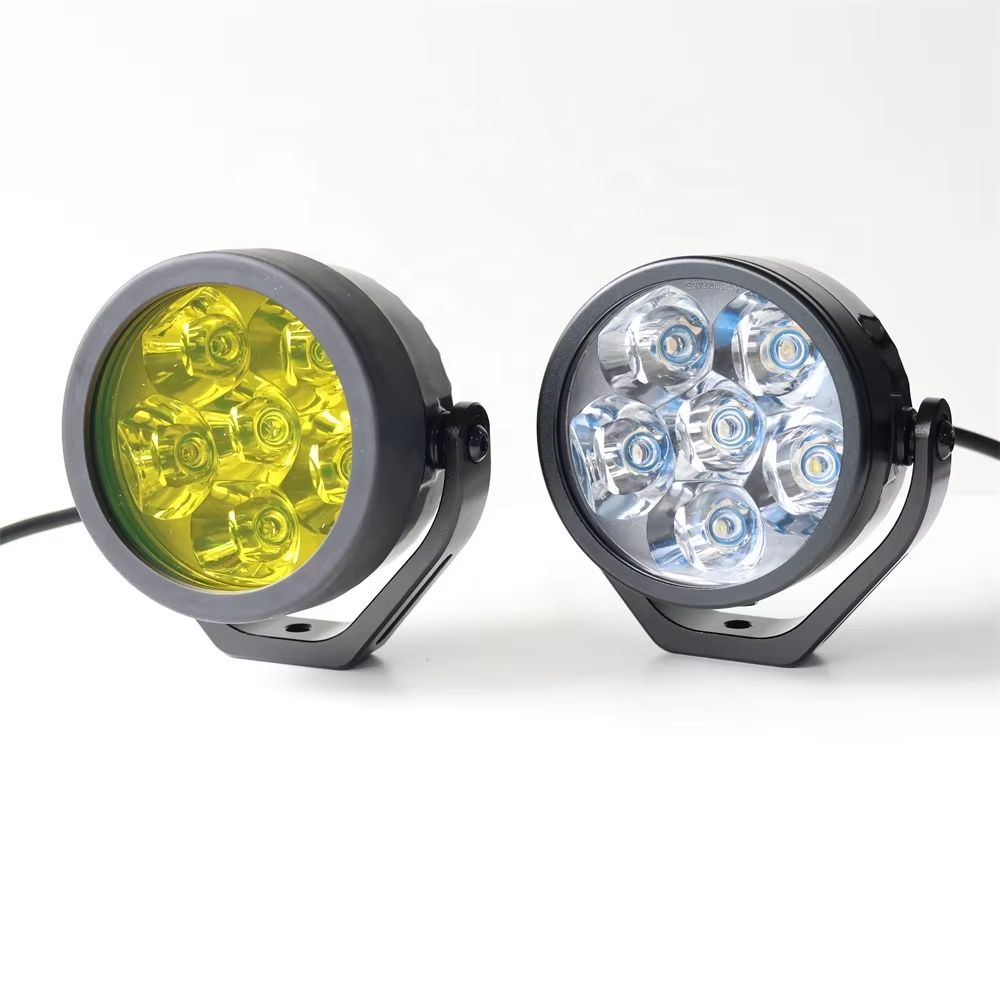
Enhanced Visibility in Adverse Weather Conditions
How High Lumen Output (1,200–3,000 lm) Penetrates Fog, Rain, and Snow Without Causing Backscatter
Standard motorcycle headlights produce 700–1,000 lumens—insufficient to cut through precipitation without scattering light back toward the rider. High-output auxiliary fog lights deliver 1,200–3,000 lumens combined with purpose-built optics: a tightly controlled beam pattern featuring a sharp horizontal cutoff and a warm color temperature (3000K–4000K). This design minimizes reflection off water droplets while maximizing forward penetration. Unlike cooler, higher-lumen white LEDs that exacerbate glare in fog, amber or warm-white beams reduce backscatter and preserve contrast on wet surfaces. Real-world testing shows such lights maintain usable road illumination beyond 300 feet in dense fog—without the “white-out” effect common with stock or improperly tuned lighting.
Optimized Wide-Beam Pattern: Ditch-to-Ditch Illumination for Ground-Level Clarity
Effective low-visibility lighting prioritizes coverage where hazards live: the road surface, shoulders, and roadside margins. Premium motorcycle auxiliary fog lights use asymmetric wide-beam optics—typically 40°–60° horizontally and only 10°–20° vertically—to project light evenly from ditch to ditch while keeping output strictly below the horizon line. This avoids upward scatter that blinds oncoming drivers or reflects off fog layers. The result is consistent ground-level illumination that reveals gravel, potholes, debris, and wildlife just off the pavement—critical for maintaining control on dark, winding roads in rain or snow. When paired with the primary headlight, these lights eliminate the “tunnel vision” effect of narrow beams, filling blind spots standard lighting cannot reach.
Proven Safety Improvements for Nighttime and Low-Visibility Riding
Increased Rider Conspicuity: IIHS/NHTSA Data Shows Up to 42% Greater Detection Distance at Night
Motorcyclists are disproportionately vulnerable at night due to low visual contrast against dark backgrounds. According to analysis by the Insurance Institute for Highway Safety (IIHS) and the National Highway Traffic Safety Administration (NHTSA), adding high-output auxiliary fog lights increases detection distance by up to 42% compared to stock headlamps alone. This enhanced conspicuity translates directly into safer interactions at intersections and on rural roads—giving other drivers critical extra time to recognize, process, and respond to an approaching motorcycle. In practical terms, this can extend visibility by nearly half a mile under low-light, low-contrast conditions—often the margin between avoidance and collision.
Faster Obstacle Recognition: How 1,200+ lm Motorcycle Auxiliary Fog Lights Reduce Reaction Time by ≥0.8 Seconds at 35 mph
At 35 mph, a motorcycle travels roughly 51 feet per second. Field studies conducted under controlled low-visibility conditions show that riders using 1,200+ lumen auxiliary fog lights identify obstacles—including animals, debris, and sudden curve transitions—up to 0.8 seconds faster than with standard lighting. That delay reduction equates to ~40 feet of additional reaction space—enough to initiate braking or evasive steering before impact. The wide, uniform beam eliminates peripheral shadows and enhances peripheral hazard recognition, enabling earlier visual processing and more confident decision-making in real-time riding scenarios.
LED Superiority: Why Motorcycle Auxiliary Fog Lights Outperform Halogen and HID in Harsh Conditions
Thermal Stability and Instant-On Response Across Rapid Temperature Shifts (Fog → Cold Rain → Damp Night)
LED auxiliary fog lights deliver consistent performance across volatile environmental shifts—such as descending into coastal fog or transitioning from dry pavement into cold rain—thanks to solid-state construction and advanced thermal regulation. Unlike HID systems that require 15–30 seconds to reach full output or halogens prone to filament failure under thermal shock, LEDs achieve peak intensity instantly. This eliminates dangerous illumination lag when entering tunnels, bridges, or sudden weather fronts—ensuring uninterrupted visibility exactly when it’s needed most.
Longevity and Vibration Resistance: Critical for Motorcycle-Specific Durability Requirements
Motorcycles subject lighting components to extreme mechanical stress: high-frequency engine vibration, repeated impacts from potholes and rough terrain, and exposure to moisture and road salt. LEDs are uniquely suited to this environment, offering 30,000–50,000 hours of rated life—up to 60× longer than halogen bulbs (500–1,000 hours) and significantly more reliable than HID alternatives. With no fragile filaments, glass envelopes, or arc tubes, LED units resist shock, corrosion, and thermal cycling. Their robustness reduces long-term maintenance and ensures dependable operation across seasons and riding conditions.
Strategic Integration: How Motorcycle Auxiliary Fog Lights Complement—Not Replace—Primary Lighting
Motorcycle auxiliary fog lights are engineered as precision tools—not replacements—for your bike’s OEM headlight system. They function best when mounted low (ideally below headlight height) and aimed to project a wide, flat beam that illuminates the immediate roadway and shoulders without dazzling oncoming traffic. This targeted placement leverages their optical advantages in fog, heavy rain, dust storms, or snow—conditions where standard headlights often worsen glare or create blinding backscatter. Always follow manufacturer positioning guidelines to ensure regulatory compliance and optimal safety. Used correctly, they form a layered lighting strategy that synergistically extends hazard detection range and cuts reaction time by ≥0.8 seconds at 35 mph—turning marginal visibility into actionable awareness.
FAQ
Why are standard motorcycle headlights insufficient in adverse weather conditions?
Standard motorcycle headlights typically produce 700–1,000 lumens. While adequate for clear conditions, this output is insufficient to penetrate precipitation without causing glare or light scatter that compromises rider visibility.
What makes auxiliary fog lights effective in fog, rain, or snow?
High-output auxiliary fog lights (1,200–3,000 lumens) use purpose-built optics and warm color temperatures (3000K–4000K) to minimize reflection off water droplets and maximize forward penetration—reducing backscatter and enhancing visibility.
How do auxiliary fog lights improve nighttime and low-visibility safety?
These lights increase detection distance by up to 42%, according to IIHS and NHTSA. Riders notice obstacles earlier and have more reaction time—up to a 0.8-second advantage at 35 mph, translating to ~40 extra feet of stopping space.
Why are LEDs superior to halogen and HID lights for motorcycles?
LEDs offer instant-on functionality, thermal stability, and resilience against vibration and harsh conditions. They also last up to 60× longer than halogens and are more reliable than HID systems, which suffer from thermal and impact vulnerabilities.
Do auxiliary fog lights replace primary motorcycle headlights?
No, they complement primary headlights by providing additional visibility and reducing glare under specific conditions like fog or rain. Mounting them low and following manufacturer guidelines ensures regulatory compliance and effective integration.
Table of Contents
- Enhanced Visibility in Adverse Weather Conditions
- Proven Safety Improvements for Nighttime and Low-Visibility Riding
- LED Superiority: Why Motorcycle Auxiliary Fog Lights Outperform Halogen and HID in Harsh Conditions
- Strategic Integration: How Motorcycle Auxiliary Fog Lights Complement—Not Replace—Primary Lighting
-
FAQ
- Why are standard motorcycle headlights insufficient in adverse weather conditions?
- What makes auxiliary fog lights effective in fog, rain, or snow?
- How do auxiliary fog lights improve nighttime and low-visibility safety?
- Why are LEDs superior to halogen and HID lights for motorcycles?
- Do auxiliary fog lights replace primary motorcycle headlights?
