
 EN

Where Can You Source Small-Batch ODM Auto Carbon Fiber Parts with Low Tooling Costs?
Start with a composite workshop that already makes vehicle trim, a specialist supplier with adaptable molds, or an automotive accessory sourcing partner willing to disclose its production route. For small orders of Auto Carbon Fiber Parts, the useful question is not simply who quotes the lowest mold price. Ask who can demonstrate a suitable process, confirm vehicle fit, and separate one-time charges from the cost of each usable part.
A distributor testing a new accessory may not know final demand yet. That uncertainty changes the decision: paying for a dedicated tool can make sense for a stable design, but an existing mold or a limited-life tool may be more practical while the design is still changing. Neither route is automatically cheaper; compare quotes for the same specification and quantities.
Where should buyers look for a small-batch partner?
There are three useful starting points for Auto Carbon Fiber Parts. First, approach composite fabricators that can show similar non-structural automotive work. Ask whether design, layup, trimming and finishing happen in-house or with named subcontractors. A workshop with relevant tooling experience may be able to explain what changes when a mirror cover, interior panel or exterior trim shape is revised.
Second, ask accessory suppliers whether their existing molds can support an ODM project. An existing shape may reduce initial investment, but it may also limit exclusivity, mounting changes and surface design. Request photos or a physical sample of the exact base part and check who may sell it to other buyers.
Third, a sourcing company can coordinate several processes when one workshop does not handle the entire job. Confirm the actual production site, responsibility for inspection and the party accountable for corrective work. Yiwu Shengying presents itself as an auto-accessory supplier serving wholesale and trade buyers; its profile does not establish specific carbon-composite manufacturing capabilities. Verify availability, outsourcing and project terms directly before treating it as a candidate for this project.
Which tooling routes deserve a quote?
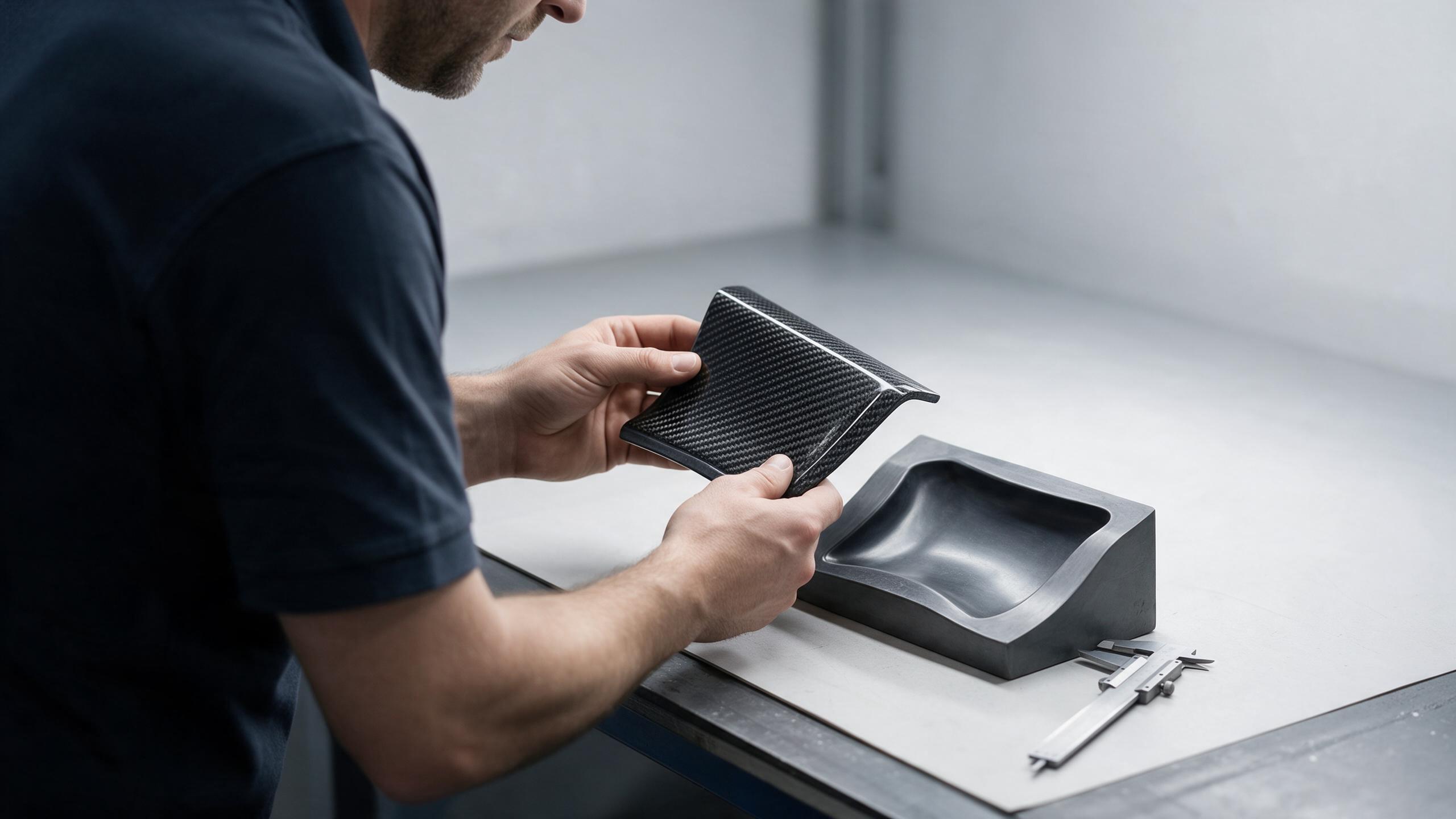
For Small-Batch ODM Carbon Fiber Parts, ask each candidate to price an existing tool, a modified tool and a new tool where feasible. Tooling price alone is not a specification. A supplier should explain tool material, expected service life, maintenance, storage, ownership and what happens if the design changes. A low initial quote may move expenses into finishing, replacement tooling or a higher unit price.
Existing or modified molds
Using a suitable existing mold can avoid making an entirely new shape. It works only if the mounting surface and visible geometry meet the brief. A modified mold may allow limited changes, but request drawings showing which features remain shared and which are customer-specific. Ask whether the modification affects future access to the tool or other buyers' orders.
Dedicated low-volume tooling
A composite tool or a tool made with additive manufacturing may suit some geometries and production conditions. The supplier must confirm whether the material tolerates the intended processing temperature and pressure, the number of acceptable parts it expects to make, and any necessary surface preparation. A printed tool is an option to evaluate, not evidence of a fixed saving. Ask for a sample and a replacement-tool price rather than relying on a generic claim.
Layup can be performed with an open mold or with a vacuum bag; processing conditions depend on the material and method. Compare the resulting finish, repeatability and labor content as well as the tooling. If a quote specifies a more demanding process, ask what it adds for this particular part and whether the benefit matters to your end use.
How do you compare the real cost of Auto Carbon Fiber Parts?
Request a written breakdown for the same approved drawing and volume from each supplier. Separate the following items so that a low tooling charge does not obscure a larger landed cost:
- Design review, model preparation and any change fees.
- Tool fabrication, modification, storage, maintenance and ownership.
- Sample production, trimming, finishing, inspection and packaging.
- Unit price at the first order quantity and at a stated reorder quantity.
- Freight, applicable import charges and payment terms, with the delivery point specified.
- Rework or replacement terms if a part falls outside the agreed acceptance criteria.
For comparison, divide the one-time charges by the planned number of acceptable parts, then add the unit and delivery costs. Treat this as a scenario rather than a forecast: calculate another version for a smaller sell-through and include the possibility of a revision. A lower upfront cost can be attractive, yet a tool that needs replacement early can change the result. Ask the supplier to explain the assumptions behind each quote.
What should an ODM request for quotation include?
A useful brief for Auto Carbon Fiber Parts begins with the vehicle make, model, year, trim level and installation position. Attach a dimensioned drawing or sample, photos of the mounting area and any clearance limits. Identify whether the item is a decorative overlay, a replacement cover or a component expected to carry load. Decorative appearance is not proof of suitability for a structural or safety-related function; have the design assessed for its intended application.
Specify whether the visible face should use woven carbon, another composite construction or a carbon-look surface. Ask the supplier to describe the substrate, fiber placement, resin and finish rather than assuming that a dark weave means the whole part has the same construction. Give a target appearance standard for weave direction, edge finish and allowable visible defects, supported by an approved reference sample.
For exterior Auto Carbon Fiber Parts, define exposure conditions and request evidence for the proposed coating and test method. UV exposure can affect epoxy systems and coatings, but a generic study does not establish the service life of a particular part. Clarify any fit checks, finish tests and documentation that you require before ordering.
How should a buyer qualify samples and small orders?
Before paying for production, request a pre-production sample made with the proposed process. Test fit on the specified vehicle or a verified fixture, checking gaps, attachment points and clearance through normal movement. Record the drawing revision, photos, inspection method and who approved the sample. If left and right components are required, inspect both rather than assuming they are interchangeable.
For Low MOQ Auto Carbon Accessories, define the minimum order by part number, finish and vehicle variant. A supplier may quote a low total quantity while requiring separate minimums for each variation. Confirm whether samples count toward the order, how repeat orders are scheduled and which changes trigger a new quote. Keep rejected and approved samples labeled so a later shipment can be compared against the same reference.
When evaluating Small-Batch ODM Carbon Fiber Parts, ask for a written production sequence and a named contact for defects. Agree on how many pieces will be checked, which measurements matter and how concerns are documented. A simple check sheet is useful only when both parties have agreed on the limits and the remedies.
Questions to settle before placing the order
- Which organization makes, trims and finishes the Auto Carbon Fiber Parts, and who handles inspection?
- Is the mold existing, modified or dedicated, and who owns it after payment?
- What quantity, finish and vehicle fit does the quoted unit price cover?
- Which sample and drawing revision define acceptable geometry and appearance?
- What evidence supports the finish and the intended installation conditions?
- What happens if an approved requirement is missed, or if a reorder requires tool repair?
Use the answers to shortlist suppliers rather than choosing by advertised minimum order alone. For Low MOQ Auto Carbon Accessories, a clear brief, an approved sample and a comparable total-cost breakdown give both sides a practical basis for deciding whether to proceed.

 Hot News




