EN

Why Is IP67 Waterproof Protection Non-Negotiable When Choosing a Motorcycle Helmet Intercom?
Rain can arrive halfway through a ride, just when a rider needs to hear a turn or speak to a passenger. A Motorcycle Helmet Intercom with a clearly documented IP67 rating gives buyers a meaningful starting point for assessing exposure to dust and water. It is a sensible purchase requirement for riders who regularly encounter wet roads, rather than an assumption that every sealed-looking unit will cope equally well.
That does not mean every rider must reject an intercom with a different rating. A rider who only uses equipment in dry conditions may set a different threshold. For wet-weather use, however, ask what was tested, which parts were included, and how the unit must be assembled. Those answers are more useful than a vague claim of being weatherproof.
What does IP67 actually tell a buyer?
The IP code describes protection against ingress under defined test conditions. In IP67, the first digit, 6, indicates a dust-tight enclosure. The second digit, 7, indicates protection against temporary immersion in water. A commonly cited IPX7 test uses immersion to a depth of one metre for 30 minutes, subject to the applicable test setup. This is a controlled test, not a promise that a Motorcycle Helmet Intercom can survive every kind of water exposure.
Compare that with IPX7: the X means a dust protection rating is not specified in that marking, not that the product necessarily lacks dust protection. A separate IP rating may cover another exposure. IP67 alone also does not automatically establish compliance with an IPX5 or IPX6 water-jet test. Ask for any additional rating if heavy spray or cleaning jets matter to your use.
The label is a starting point, not the whole story. Confirm whether the IP67 claim applies to the main module alone or to the module installed with its mount, cable connections and port cover. A Motorcycle Helmet Intercom may depend on a closed cover or correctly seated connector to meet its stated rating.
Why can rain turn a small detail into a purchasing issue?
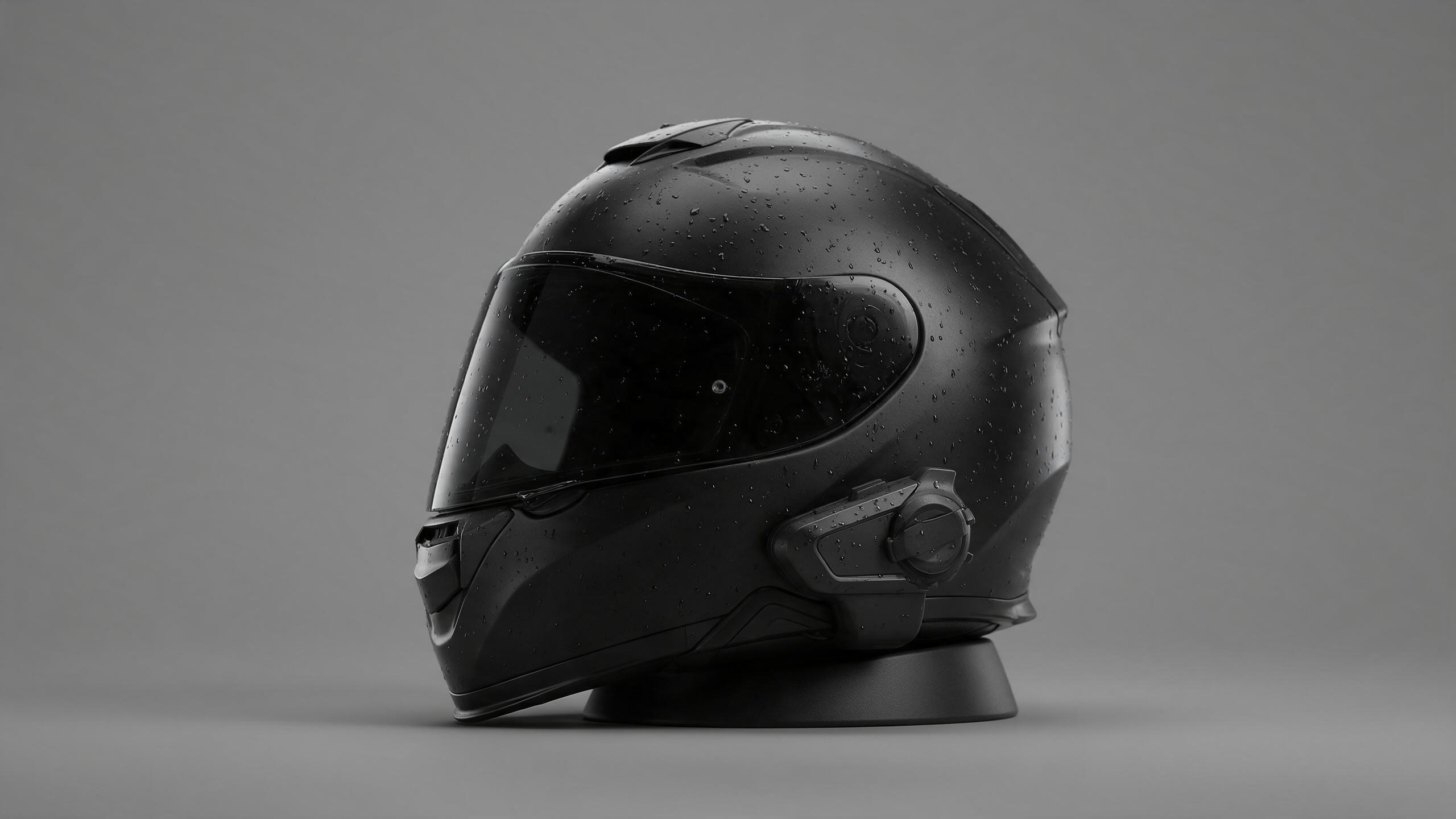
Helmet-mounted electronics face water from more than one direction. A rain shower, road spray from another vehicle and moisture around a charging flap can affect different parts of the assembly. Dust on a gasket or a cable pulled at an angle may also interfere with a good fit. The right question is not simply whether the outside looks sealed; it is whether the intended assembly has a documented protection rating.
Consider a commuter who rides through changing weather. A Motorcycle Helmet Intercom that can only be used with an exposed charging connection open may require a different routine from one with a secure closed cover. Neither the enclosure rating nor a dry-weather demonstration tells you how a particular accessory behaves while connected. Check the supplier's instructions before assuming that charging and wet-weather use can happen at the same time.
Water resistance is only one part of dependable communication. Battery condition, pairing, speaker placement and local signal conditions also matter. Riders should not rely on an intercom as their only means of navigating or coordinating in an emergency, and should set up controls before riding or stop safely before making adjustments.
IP67 versus lower or different ratings
An IPX4 marking describes protection against splashing water under the relevant test, whereas IPX6 covers powerful water jets under its own specified conditions. IP67 adds a dust-tight first digit and an immersion test. These are different test categories, not a simple guarantee that an immersion-rated unit passed every spray test. Compare the actual exposure and the complete markings rather than selecting a number by appearance alone.
For a buyer specifying an IP67 Waterproof Motorcycle Helmet Intercom, request the standard reference, the tested configuration and evidence applicable to the exact model and revision. A datasheet is useful; a relevant test report can provide more context. Check whether an independent laboratory performed the test instead of assuming that any IP claim is an independent certification.
A Weatherproof Bike Bluetooth Intercom with a different documented rating may suit a different operating pattern. A fair comparison also considers helmet fit, controls, replacement parts and the supplier's written care instructions. If the intended rider expects regular rain and road spray, document those conditions and ask the supplier which ratings and restrictions apply.
Inspect the whole assembly before ordering
When comparing a Motorcycle Helmet Intercom for retail or wholesale, inspect the same configuration that customers will use. The housing may be rated while an optional accessory is not. If information is missing, note it as an open question rather than filling the gap from a photograph.
- Identify the rated item. Match the model number and revision on the documentation to the sample. Check whether the microphone, speakers, cables and mounting cradle are covered or separately rated.
- Check the seals. Look at the port cover and cable entry. Ask how each must be positioned during use and whether users can see when the cover is seated.
- Review mounting compatibility. Check helmet shape, clamp or adhesive instructions, available surface and cable routing. Follow the helmet and intercom manufacturers' guidance; do not modify the helmet shell without approved instructions.
- Ask about operation in rain. Confirm button access with gloves, audio controls, and whether any connected accessory changes the permitted use conditions.
- Review documentation and support. Request care instructions, replacement seal or cover availability, and the supplier's stated warranty terms. Do not infer water-damage coverage from the IP marking.
For a batch order, use these same questions to create a comparison sheet for each Motorcycle Helmet Intercom. Record the model, rating, included components and unresolved items alongside sample observations. A retailer can then describe the rated configuration accurately instead of carrying an unqualified claim across every accessory.
Care after a wet ride
After riding, follow the manufacturer’s cleaning and drying instructions. Wipe the exterior with a soft cloth where permitted and inspect the charging cover for grit or visible damage. Before opening a port, keep water clear of the opening. Allow the device and charging port to dry before attaching a cable; do not plug a charger into a wet connector.
Do not use a pressure washer on a Motorcycle Helmet Intercom merely because its label includes IP67. Pressurised water, hot water, detergents, salt and damage from wear may fall outside the declared test conditions. If exposure to salt or cleaning chemicals is likely, ask the manufacturer how to clean the unit and what the warranty covers. Avoid applying solvents or improvised heat unless the instructions specifically permit them.
Seals and covers can wear or become misaligned over time. If a cover no longer closes as intended, stop treating the original rating as an assurance of present condition and ask about repair or replacement. A visual inspection is useful but cannot reproduce a laboratory ingress test.
Questions to take to a supplier
Before committing to a Motorcycle Helmet Intercom, ask for the exact IP marking and the document supporting it. Which configuration was tested? Must a port flap be closed? Are there separate jet ratings? Are helmet-mounted cables and accessories included? What restrictions apply to charging, washing and replacement of a damaged cover?
Then compare the answers against the rider's actual route and maintenance routine. For buyers assessing related riding accessories, visit the company website and request the current product documentation rather than assuming that a particular model has been rated. IP67 is a strong screening criterion for a Motorcycle Helmet Intercom intended for wet rides, but the documented configuration, installation and care determine how useful that criterion is in practice.
 Hot News