
 EN

Why Is Chemical and Oil Resistance Essential for an Under-Hood Automotive Fastener Clip?
An under-hood fastener clip may hold a wiring loom, cover or lightweight panel in position while the surrounding area sees heat, vibration and service fluids. A clip that fits on installation day can behave differently after contact with oil or cleaner. Chemical resistance matters because a change in the material can change the way the clip grips, flexes or releases. For buyers, that makes fluid exposure a selection condition, not just an attractive label.
The right question is not whether every fastener clip resists oil in general. It is whether the exact material and design can perform in the particular location, with its likely fluids, temperature and mechanical load. The checks below help buyers and repair professionals make that decision without assuming an untested part is suitable.
What can fluid exposure do to a fastener clip?
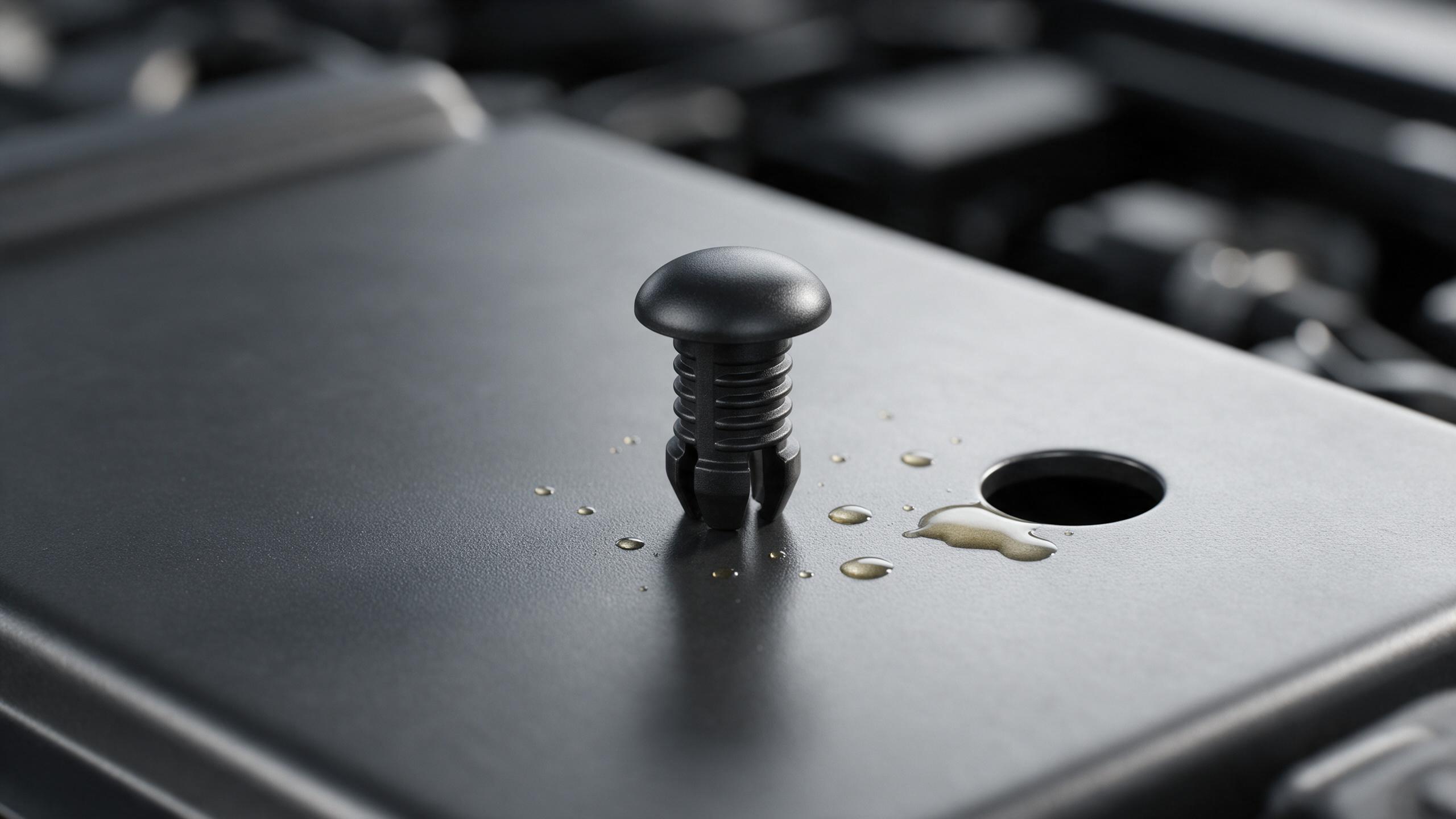
Depending on the polymer and fluid, a fastener clip can absorb liquid, swell, soften or become less flexible. Other combinations may encourage surface damage or cracking. These are possible outcomes, not a prediction for every material. A clip's thin retaining legs and locking features deserve attention because they must flex during assembly and continue to engage the panel afterward.
If a fastener clip loses grip, a cover or loom may move, rattle or rub against nearby parts. If its legs become brittle, removal or reinstallation can break them. Visible appearance alone is not enough: a part can look intact while its retention or insertion behavior has changed. The consequences depend on the component being held and the location; a lightweight trim retainer is not a substitute for a specified structural fixing.
Some polymers are vulnerable to environmental stress cracking when an incompatible liquid contacts a stressed part. A fastener clip is often strained where its legs deflect against the hole, so a material-only compatibility chart may not capture the full situation. Molding stresses, abrupt edges and assembly deformation may also matter. Ask whether the combination has been evaluated in the assembled condition.
Which under-hood fluids and conditions matter?
Start with the actual mounting point. A fastener clip near a filler or service point may encounter engine oil during maintenance, while another location may see coolant, road splash or a cleaning product. Name the fluid and, where relevant, its formulation; resistance to one liquid does not establish resistance to all liquids. Consider incidental splashes, repeated wiping and prolonged contact separately.
Temperature is part of that question. A fastener clip near a warm component experiences a different exposure from one near the outer edge of the engine bay. Heat can affect both a polymer's properties and its interaction with a fluid. Request the expected local operating and peak temperatures from the vehicle or equipment specification rather than treating a generic engine-bay figure as a rating.
Time and load matter too. A fastener clip may be exposed briefly during a service operation or remain in contact with residue between inspections. Combine this information with vibration, panel movement and the number of planned removal cycles. A fluid test at room temperature for a short interval cannot, by itself, establish long-term installed performance.
How should buyers compare materials and clip geometry?
A material family such as polyamide is a starting point, not a complete specification. Different grades, additives and processing conditions can change how a fastener clip responds. Ask for the exact grade and supplier data for the relevant fluid and temperature; do not infer resistance or a temperature limit from color, appearance or the word nylon alone.
Mechanical fit is equally important. Check the mounting hole's shape and size, the combined panel thickness, head clearance and the direction of load. An oil-resistant under-hood fastener clip that does not engage the hole correctly can still work loose. Conversely, forcing an oversized clip into a hole can add stress to its legs and surrounding panel. Compare the part with a drawing or a measured original, then verify a sample in the intended assembly.
Likewise, a heat-resistant engine bay push pin should be selected for its actual local temperature and retention requirement, not merely its product description. Confirm the head style, stem length, grip range and access for removal. If the attachment holds a safety-critical component, use the vehicle manufacturer's specified part and procedure instead of selecting a generic replacement.
What evidence should an oil-resistance claim include?
Ask the supplier for a test report that identifies the fastener clip or material grade, the liquid, temperature, exposure duration and the properties measured before and after exposure. A useful comparison also explains sample conditioning and the acceptance criteria. A statement that a part is oil resistant, without those conditions, leaves too much uncertainty for a purchase decision.
ISO 175:2010 describes testing the effects of immersion in liquid chemicals on unrestrained plastic specimens and measuring changes in their properties. It is a useful way to discuss material screening, but the standard's specimen immersion conditions are not the same as proving that an installed fastener clip will retain a panel after heat, load and vibration. Confirm the applicable edition and agree on any additional component-level checks with the supplier or qualified test provider.
A practical evaluation can compare insertion and removal behavior, retention force and visible changes before and after the agreed exposure. Test the fastener clip in representative panel material and thickness, with the intended hole geometry. Include an unexposed comparison and record any deviations. Set pass criteria from the application requirements before testing; a report without an agreed threshold does not establish suitability.
A purchasing and inspection checklist
- Define the location. Identify what the fastener clip holds, its exposure to fluids, heat, vibration and access for service.
- Confirm the fit. Record the hole dimensions, panel stack, head clearance, retention direction and original design.
- Identify the exposure. Specify the fluids, likely contact pattern, temperature range and expected duration or service interval.
- Request evidence. Match the fastener clip grade and test conditions to the intended application. Ask about residual retention and repeated removal where relevant.
- Inspect samples. Check seating and engagement on the actual assembly. Look for deformation or cracking after the agreed evaluation, and follow the vehicle service instructions.
For wholesale orders, retain the confirmed drawing, material identification and test conditions alongside the SKU. Similar-looking clips can have different grip ranges, so a photo alone should not drive substitution. If a specification or report is missing, keep that point open until the supplier confirms it.
When should a fastener clip be replaced?
Replace a fastener clip that is cracked, distorted, missing a locking leg or no longer engages as specified. If oil is present, address the source of the leak using the appropriate service procedure rather than relying on a resistant clip to solve it. Work on a cooled vehicle and use suitable protective equipment; consult a qualified technician if the mounting point or surrounding components are uncertain.
Chemical and oil resistance helps preserve the properties a fastener clip needs to hold and release as intended. The sound choice combines verified material compatibility with the correct geometry and an application-specific check. Before ordering, document the exposure and fit, then ask for evidence that matches both.
 Hot News




