
 EN

Which Suzuki Jimny, Toyota Yaris, and Nissan Models Have the Highest Demand for a Car Armrest Box?
For a wholesaler, “highest demand” for a Car Armrest Box should not mean guessing which badge sells most units. No verified regional sales or order dataset is available here to rank compact off-road vehicle, compact hatchback, or multi-model vehicle range models. A more useful signal is repeatable, model-specific demand: buyers who can identify a vehicle generation, year, body style, center-console layout, and the storage problem a Car Armrest Box is expected to solve.
This distinction matters in day-to-day sourcing. Search results for a Car Armrest Box lean toward storage organizers, cup holders, phone slots, and universal-looking accessories. They rarely explain whether a console footprint, seat-belt buckle, cup holder, parking-brake path, or seat movement matches the vehicle. For B2B sourcing, a product that fits a well-described vehicle group is more actionable than a broad claim about popularity.
Start with demand signals that can actually be verified
A reseller can treat a Car Armrest Box inquiry as a demand signal when the request includes a clear vehicle profile and a recurring use case, such as adding small-item storage without blocking a factory cup holder. It is not enough that a buyer writes “compact off-road vehicle,” “compact hatchback,” or “multi-model vehicle range.” Those names cover different years, markets, trims, and interior arrangements.
- Repeated fitment questions: Several inquiries asking for the same model-year and console area may justify a Car Armrest Box sample review.
- Specific installation evidence: Photos, console measurements, and seat-position clearance tell more than a generic vehicle name.
- Channel fit: Stores may value a display-friendly unit, while online sellers need clear year and body-style attributes for a Car Armrest Box listing.
- Reorder potential: A short list of verified fitments is often easier to replenish than a large “universal” range with unresolved returns questions.
For practical sourcing, use qualified inquiries, sample outcomes, and completed fitment records to judge demand. Without that data, no brand family can honestly be called the demand leader for a Car Armrest Box.
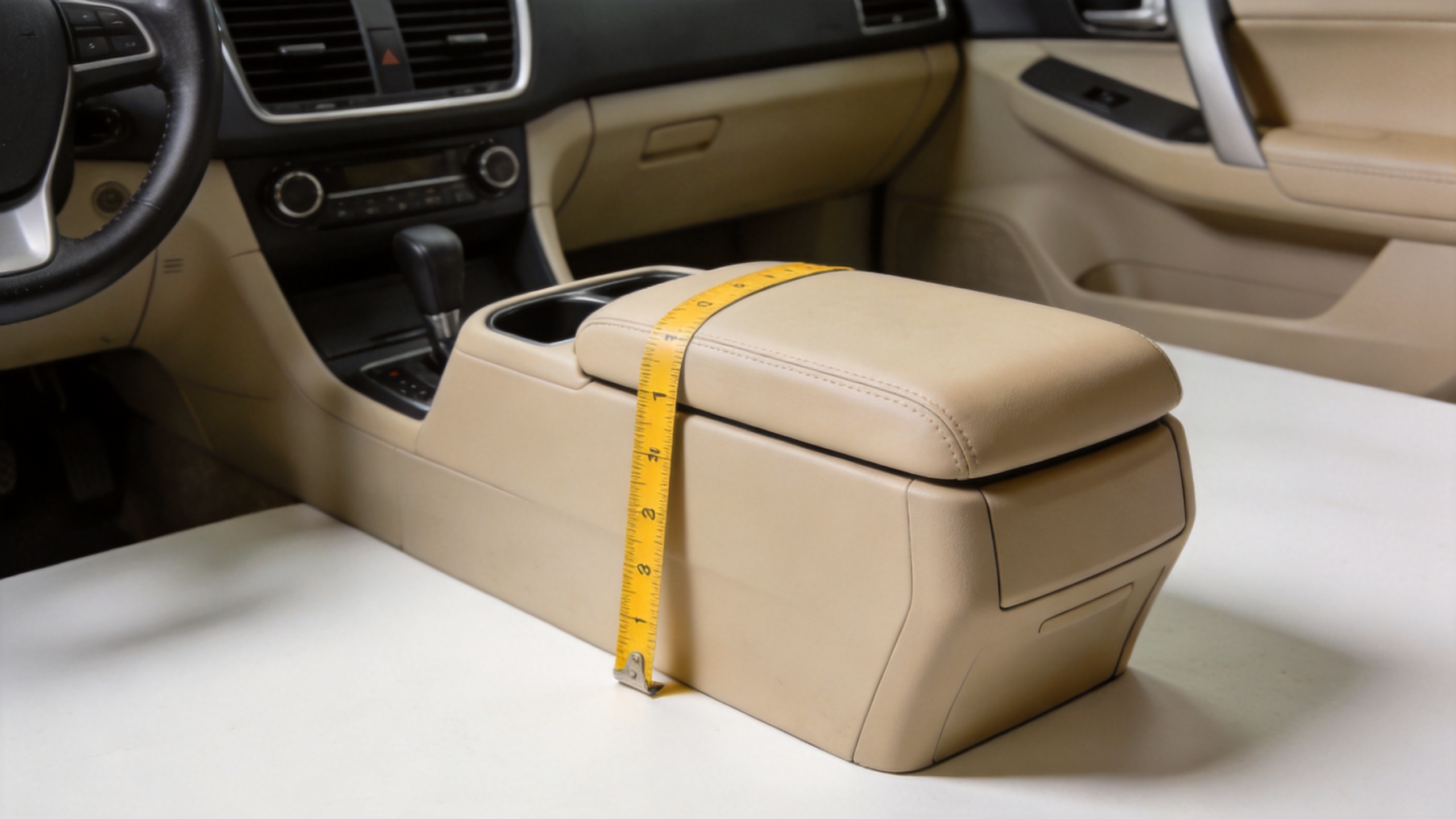
compact off-road vehicle: focus on generation and cabin layout
The compact off-road vehicle can create strong interest in a vehicle-specific armrest-box assortment because its compact cabin encourages buyers to examine storage and elbow support closely. That is an application observation, not a sales ranking. Published compact off-road vehicle specification pages also show multiple variants, which is a reminder to check the exact vehicle before assigning a Car Armrest Box.
For a compact off-road vehicle inquiry, record the generation, market, year, transmission, existing console or cup-holder arrangement, and where the box will rest or fasten. Ask for a straight-on photo of the center tunnel plus a side view with both front seats in their normal positions. A Car Armrest Box that looks proportionate in a product photo can still interfere with a buckle, handbrake, selector movement, or seat travel in the actual cabin.
compact hatchback: separate the nameplate from the platform
A compact hatchback request needs the same caution. The compact hatchback name has been used across generations and markets, and published XP210 information shows regional dimension variation. That does not prove that one compact hatchback generation has greater Car Armrest Box demand than another. It shows why the buyer should provide body style, year, market, transmission, trim, and images of the console before a fitment statement is made.
A practical vehicle-specific armrest-box program may therefore use separate fitment cards rather than one mixed label. Each card can show the compatible year range only when it has been checked, the measurement points used, the mounting method, and any known clearance questions. This makes a Car Armrest Box comparison clearer for a retailer and reduces the temptation to treat visual similarity as proof of compatibility.
Multi-model vehicle ranges: group demand by exact vehicle and console
An aftermarket center console request is too broad for automatic matching. multi-model vehicle range covers many vehicle types, generations, and market-specific interiors. When available, the VIN or build-sheet information can help confirm model-year and factory configuration; it should be paired with console photos and measurements because it does not by itself establish every accessory connection.
For a vehicle-specific center-console assortment, segment requests by model line, year range, body style, transmission, and factory storage layout. A Car Armrest Box buyer may prioritize a lid opening, cup-holder access, storage depth, or a stable resting surface, but each point must be verified against the actual console. This approach creates usable demand records instead of one unsupported “multi-model vehicle range” total.
Compare the three groups with a sourcing matrix
| Vehicle group | What may indicate qualified demand | What to confirm before listing a Car Armrest Box |
|---|---|---|
| compact off-road vehicle | Repeated requests tied to one generation and console photo set | Generation, year, transmission, center-tunnel footprint, buckle and seat clearance |
| compact hatchback | Consistent requests within one body style and market | Generation/platform, regional version, console shape, cup holders, lid travel |
| multi-model vehicle range model line | Requests clustered around a named model and year range | Model line, year, trim, VIN/build details where available, console measurements |
The matrix is not a brand ranking. It helps a distributor decide where a Car Armrest Box sample, fitment sheet, or smaller initial assortment may be justified. Compare information completeness before comparing volume: an inquiry with photographs and dimensions is more useful than several vague searches.
For every Car Armrest Box candidate, keep the sample photos, measurement points, console layout, and clearance observations together. A repeatable Car Armrest Box record lets another buyer evaluate the same configuration without relying on a generic label. Review the Car Armrest Box lid movement and seat-clearance result before the listing is released.
A B2B checklist before committing inventory
- Collect the exact model, year, body style, market, and transmission.
- Request top and side photos of the front-center area, including cup holders and buckles.
- Measure the available footprint, height, lid-opening space, and distance to seat-adjustment controls.
- Confirm how the Car Armrest Box is held in place and what accessories are included; do not assume a mounting method from appearance.
- Review a sample on the intended vehicle configuration before creating a model-specific listing.
- Keep the result as a reusable fitment record for later Car Armrest Box inquiries.
What should a buyer ask next?
The practical answer is not that one compact off-road vehicle, compact hatchback, or multi-model vehicle range model automatically has the highest demand for a Car Armrest Box. The strongest candidate is the vehicle group for which a seller has repeatable, documented inquiries and a verified console match. Begin with the model-and-year questions, then assess storage needs and installation clearance. If those details are not yet available, the correct next step is to request them rather than promise a Car Armrest Box fit.
 Hot News




