
 EN

What Packaging Options—100pcs Polybags or Retail Boxes—Work Best for Wheel Nut Indicator Wholesalers?
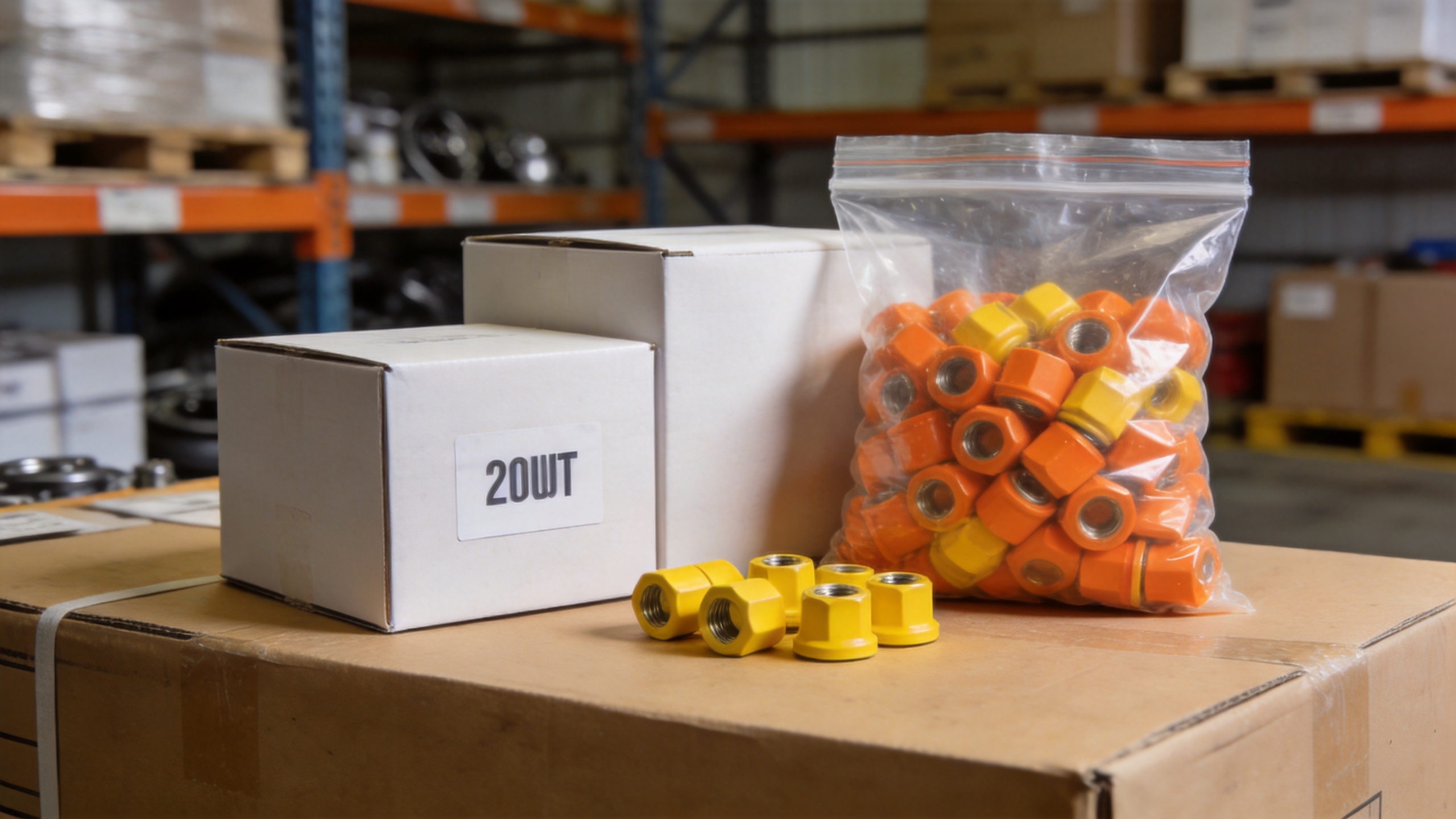
For a wholesaler, choosing packaging for a Wheel Nut Indicator order is not simply a presentation decision. It affects how quickly a warehouse can count stock, how easily a reseller can identify the right size, and how much repacking is needed before the product reaches a fleet workshop or retail shelf. In many cases, a 100-piece polybag is the practical route for replenishment and bulk supply, while a retail box is more useful when the same Wheel Nut Indicator must be displayed, resold individually, or separated into a branded channel program.
The right answer depends on the buyer’s distribution model. A purchasing team should first confirm the target nut size, the intended application, the order quantity, and the receiving channel. Packaging comes after those essentials, not before. That sequence matters because a package that is convenient for stock handling cannot correct a size mismatch or replace product-specific installation instructions.
Start with the buyer’s route to market
A useful first question is: where will the shipment go after it leaves the wholesaler? A Wholesale Wheel Nut Indicator order for a maintenance distributor may move directly into parts bins or issue counters. In that setting, a compact bulk format can make receiving and replenishment straightforward. A retailer selling smaller quantities across a counter, online marketplace, or mobile service van may need a package that carries clear product identity at the unit level.
That is why the pack format should follow the channel rather than a vague idea of premium packaging. Search results for this product category commonly show size-specific packs and 100-piece quantities, which makes pack-count clarity a real purchasing concern. Still, the merchant’s available sizes, colors, materials, labels, and exact pack configuration need confirmation before an order is placed.
When a 100-piece polybag makes sense
A 100pcs Polybag Truck Lug Nut Indicators format is often suitable when the downstream buyer regards the product as a workshop or fleet consumable. The bag groups one defined SKU in a count that can be received, stored, and issued without individual retail presentation. For buyers who reorder a familiar size, this can reduce handling steps between delivery and shelf placement.
- Bulk replenishment: Fleet service teams and maintenance-oriented distributors may prefer a single clearly marked bag for one size and color.
- Warehouse efficiency: A sealed bulk pack can simplify count checks when the outside label states the product description, nominal size, quantity, and SKU.
- Flexible downstream packing: A wholesaler that already has its own kitting or labeling process may prefer bulk units it can divide later.
- Lower packaging complexity: Fewer individual units generally mean fewer package components to inspect and manage, although the actual cost difference should be quoted rather than assumed.
There is a boundary to this choice. A polybag is not automatically appropriate just because the order is large. If several sizes share one shipment, each bag needs a clear, durable identifier. A buyer should not rely on color alone to distinguish a Wheel Nut Indicator size. Ask for the label fields beforehand and check whether the product count is per bag, per inner carton, or per master carton.
When retail boxes are worth considering
Retail boxes are usually more relevant when channel presentation and unit separation matter. A distributor supplying physical stores may need a package that stays recognizable after it is removed from a master carton. An online seller may need barcode space, a front-facing product name, and a concise size statement. In those cases, individual or smaller boxed units can make the downstream workflow clearer.
For a Wholesale Wheel Nut Indicator program, a box can also help separate variants where the customer carries several nut sizes. The box should not be treated as proof of compatibility, however. It is a communication surface. Its value comes from making the correct details visible: the product type, the applicable size or range where confirmed, the count, color if relevant, lot or SKU reference if supplied, and any handling information approved for that item.
Retail boxes can introduce more receiving and storage work. They occupy more volume per piece than a consolidated bulk pack and may require a different master-carton plan. Those trade-offs may be worthwhile for a reseller, but they should be measured against the buyer’s shelf, marketplace, and re-labeling needs rather than presented as a universal upgrade.
Compare the formats by operational question
| Decision question | 100-piece polybag | Retail box |
|---|---|---|
| Who receives it? | Often practical for stockrooms, fleet workshops, and bulk distributors. | Often practical for stores, resellers, and mixed sales channels. |
| How is it sold next? | Suitable when the buyer issues or repacks bulk stock. | Useful when the buyer needs a ready-to-display or ready-to-ship unit. |
| What must the label do? | Make size, count, SKU, and variant easy to verify at receiving. | Support product recognition plus the same essential size and count checks. |
| What should be confirmed? | Bag strength, closure, label placement, pack count, and carton grouping. | Box dimensions, print fields, barcode needs, unit count, and master-carton arrangement. |
Do not let packaging replace product verification
Wheel-related accessories require careful product-level confirmation. A Wheel Nut Indicator can support a visual checking routine when it is the correct type and size for the application, but it is not a substitute for specified installation, inspection, torque procedures, or professional assessment where required. Before deciding between a polybag and a box, confirm the actual nut measurement, the intended vehicle or fleet application, and the supplier’s current product documentation.
This is especially important when a buyer requests a 100pcs Polybag Truck Lug Nut Indicators configuration. “Truck” alone does not establish a single fitment. The buyer should submit the required dimensions, expected quantity per SKU, and any sample or labeling reference. If the order includes multiple variants, separate the purchase order lines rather than relying on descriptive notes that can be lost during packing.
A practical packaging confirmation checklist
- List each Wheel Nut Indicator SKU with its confirmed size and intended application.
- State whether the order is for warehouse replenishment, resale, store display, online fulfillment, or a combination.
- Choose the pack count per bag or box and specify how many inner packs go into each master carton.
- Approve label content: product name, size, quantity, SKU, variant identifier, and any buyer-supplied barcode or reference.
- Ask whether a packaging sample, artwork proof, or carton marking needs review before full production.
- Keep product facts and packaging requests separate in the purchase record so that later changes remain visible.
The practical choice for wholesalers
Choose a 100-piece polybag when the priority is efficient bulk handling, clear stock segregation, and later allocation by a distributor or workshop. Choose retail boxes when downstream presentation, individual resale, or multiple variant recognition has a higher value. Some wholesalers may reasonably use both formats: bulk bags for fleet-oriented accounts and boxes for retail-oriented customers.
In short, the packaging decision should make the next handling step easier. Start with the confirmed Wheel Nut Indicator size and the buyer’s channel, then define count, label fields, and carton layout. That approach gives the buyer a more usable order specification than selecting a pack format from appearance alone.

 Hot News




