
 EN

Is a 12V Universal Motorcycle LED Logo Light Compatible with All Cruisers, Scooters, and ATVs?
No. A 12V Universal Motorcycle LED Logo Light may fit some cruisers, scooters and ATVs, but the label alone does not establish fit for every vehicle. A usable installation depends on the light’s actual voltage range, the vehicle’s electrical circuit, a secure mounting location and the intended use. Check those details for the exact light and vehicle before ordering.
Think of “universal” as a starting point for a compatibility conversation, not a vehicle list. An installer looking at a Motorcycle LED Logo Light has to match the hardware and the wiring as well as the projected image. If either the light’s instructions or the vehicle’s specifications are missing, the fit remains unconfirmed.
What does 12V universal actually tell you?
A 12V label describes a nominal supply voltage; it does not identify the connector, mounting bracket, operating voltage range or control method. Ask the supplier whether the specific Motorcycle LED Logo Light requires direct current, what input range it accepts and whether its leads or connectors are included. Then check the vehicle manual for its electrical system and the intended accessory circuit.
A vehicle described as 12V can see different voltages with its engine or charging system operating. The light’s documented operating range must accommodate the conditions of the chosen circuit. Do not assume that a 12V label alone covers those conditions, or that every scooter lighting circuit supplies the same type of current. If the circuit is alternating current, a direct-current-only light needs an appropriate manufacturer-approved solution; do not connect it directly on that assumption.
Also verify polarity, current draw and available circuit capacity. A Motorcycle LED Logo Light may have a small load, but the actual draw and the capacity of the chosen circuit still need confirmation. A switched circuit, a separate switch and a welcome-light trigger produce different behavior. Decide whether the projection should operate when parked, with ignition on, or only when another approved control is activated.
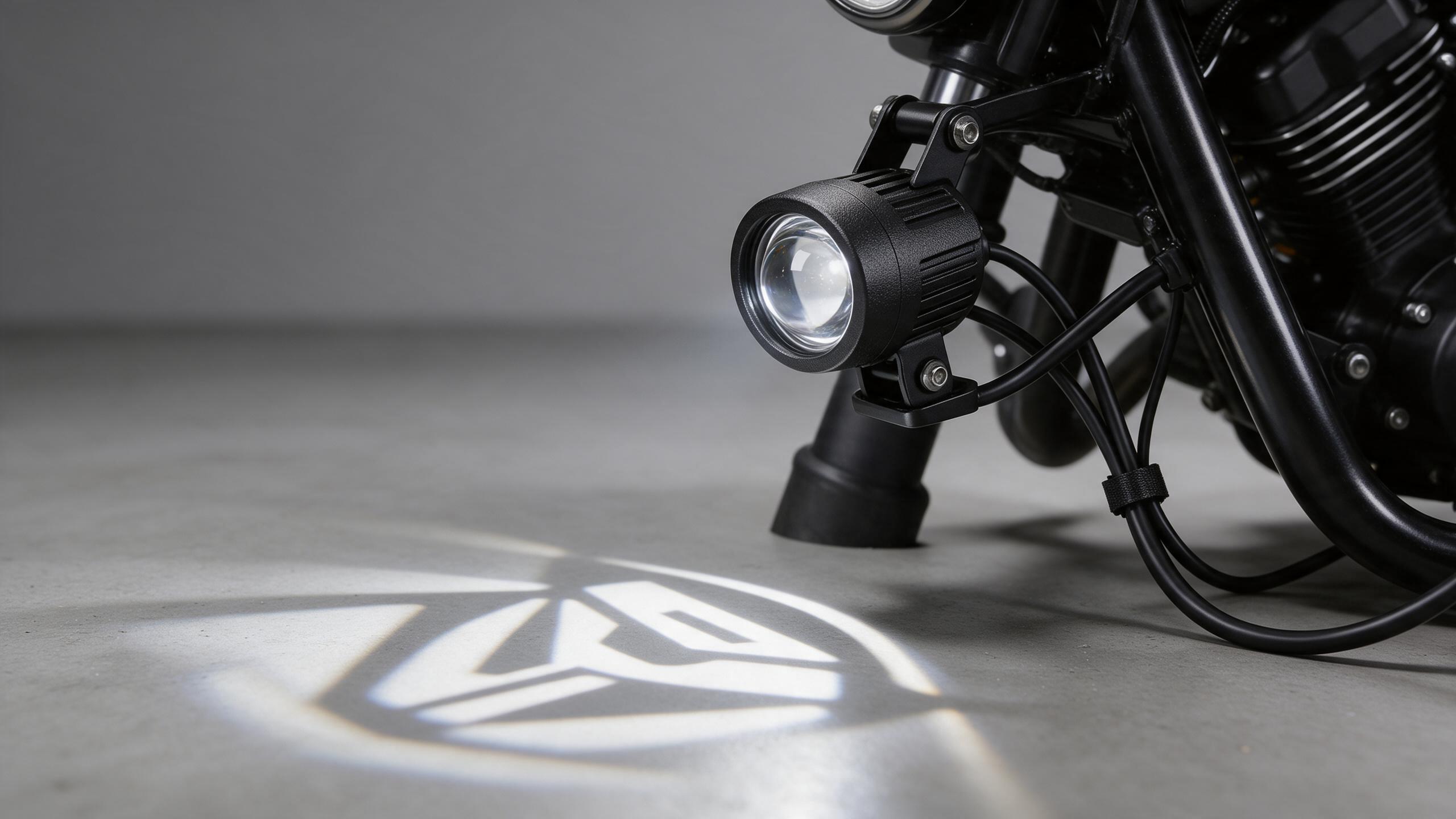
Compare fit on cruisers, scooters and ATVs
Cruisers: look beyond exposed mounting space
A cruiser may offer a visible frame area or existing accessory bracket, but neither is proof of fit. Compare the light body and bracket dimensions with the proposed location. Check that the attachment remains secure through steering movement and suspension travel, and that the housing stays clear of hot surfaces and moving parts. A Motorcycle LED Logo Light should not interfere with the rider’s feet, controls or required lamps.
For a projection aimed at the ground, check the available angle and the distance to the surface. A spot that holds the housing may still produce a distorted or obscured image. Test the intended position with the actual vehicle on level ground before making a permanent alteration.
Scooters: verify the circuit and panel clearance
On a scooter, body panels can limit space for the light, connectors and cable routing. Check the room behind the panel and the proposed exit point for the cable. Do not drill a panel or modify a harness until the vehicle owner and installer have agreed on a suitable method.
Electrical architecture matters too. Confirm whether the intended feed is compatible with the Motorcycle LED Logo Light rather than selecting a wire because it powers another lamp. If the circuit type or polarity is unclear, use the vehicle wiring documentation or ask a qualified technician to identify it.
ATVs: account for exposure and movement
An ATV’s mounting point may encounter mud, water spray, debris and vibration. Ask for the specific light’s documented environmental rating and mounting instructions; do not infer a rating from its appearance. Route cables where they cannot be pinched by steering or suspension movement, rubbed by edges, or exposed to exhaust heat.
A Cruiser Scooter ATV Welcome Light is a description of possible uses, not evidence that one fixture has been tested on every machine. For off-road use, inspect mounting stability and connections as part of routine checks. If the intended use exceeds the product’s documented limits, choose another location or another light.
Five checks before buying or installing
- Record the vehicle. Note make, model, year and any electrical modifications. Obtain the relevant manual or wiring diagram, rather than relying on vehicle category alone.
- Request the light’s documentation. Compare input voltage range, current type, polarity, current draw, connector, dimensions and mounting method with the vehicle. Ask about included hardware and cable length.
- Choose a protected feed. Follow the vehicle and light instructions for a suitable fused circuit, fuse rating and wire size. A dedicated fused supply may be appropriate where specified; do not bypass an existing fuse or overload a circuit.
- Dry-fit and route. Check steering, suspension, ground clearance and nearby heat before fixing the bracket. Protect cables from abrasion and secure them without obstructing controls or service access.
- Confirm operation and rules. Check when the light switches on, whether the image is visible at the intended angle and whether local rules permit that color, location and use. Inspect the installation again after initial use.
If a connector, rating or mounting instruction is absent, pause rather than guessing. A Motorcycle LED Logo Light with loose leads is not automatically compatible with a vehicle’s factory plug. An installer can assess whether an appropriate adapter or other approved installation method exists without compromising the original wiring.
Are decorative logo projections legal on the road?
Rules vary by jurisdiction, vehicle class, color, placement and whether the light is used while moving or parked. For example, Illinois Vehicle Code section 12-218 addresses auxiliary accent lighting on motorcycles. That provision is not a blanket approval for every projected logo or for scooters and ATVs. Check current local requirements for the exact vehicle and intended use; contact the relevant authority if the classification is unclear.
A Motorcycle LED Logo Light is a decorative accessory, not a substitute for a headlamp, brake lamp, indicator or reflector. Do not position it where it obscures required equipment or distracts other road users. Keep the light off on public roads if its permitted use cannot be established.
What should a wholesale buyer ask the supplier?
When ordering for several vehicles, organize the inquiry by vehicle and mounting point rather than asking for one universal fitment claim. Request a dimensional drawing, operating range, wiring instructions, connector details and any available environmental documentation for the exact SKU. Ask whether a sample and the relevant mounting hardware can be supplied for evaluation before committing to a larger quantity.
Keep any unresolved fields visible in the listing or sales material. A compatibility statement should identify the actual vehicle and verified conditions; if those conditions have not been checked, describe fit as unconfirmed. This also helps a retailer answer installation questions without turning a generic Motorcycle LED Logo Light description into a promise.
Bottom line
A 12V Universal Motorcycle LED Logo Light can be a candidate for a cruiser, scooter or ATV when its documented electrical requirements, physical mounting and intended use match that particular vehicle. Verify the circuit, space and local rules first. If any item is unknown, consult the manufacturer’s instructions and a qualified installer before purchase or installation.
 Hot News




