
 EN

How Do High-Definition Glass Lenses Prevent a Motorcycle LED Logo Light from Fading Over Time?
A clear glass lens can help a Motorcycle LED Logo Light retain a crisp projection by keeping the optical path stable and reducing the loss of detail associated with a damaged or clouded lens. It cannot, by itself, stop the LED, logo image, seals or electronics from aging. For a wholesale buyer, the useful question is not whether a lens is called “high-definition,” but what the whole projector has been tested to withstand.
Think of the projector as a chain: a light source illuminates a logo image, optical elements focus it, and the beam reaches the road or another surface. A weak link anywhere in that chain can make the image look faded. The lens matters, but its material is only one part of the answer.
What the glass lens actually does
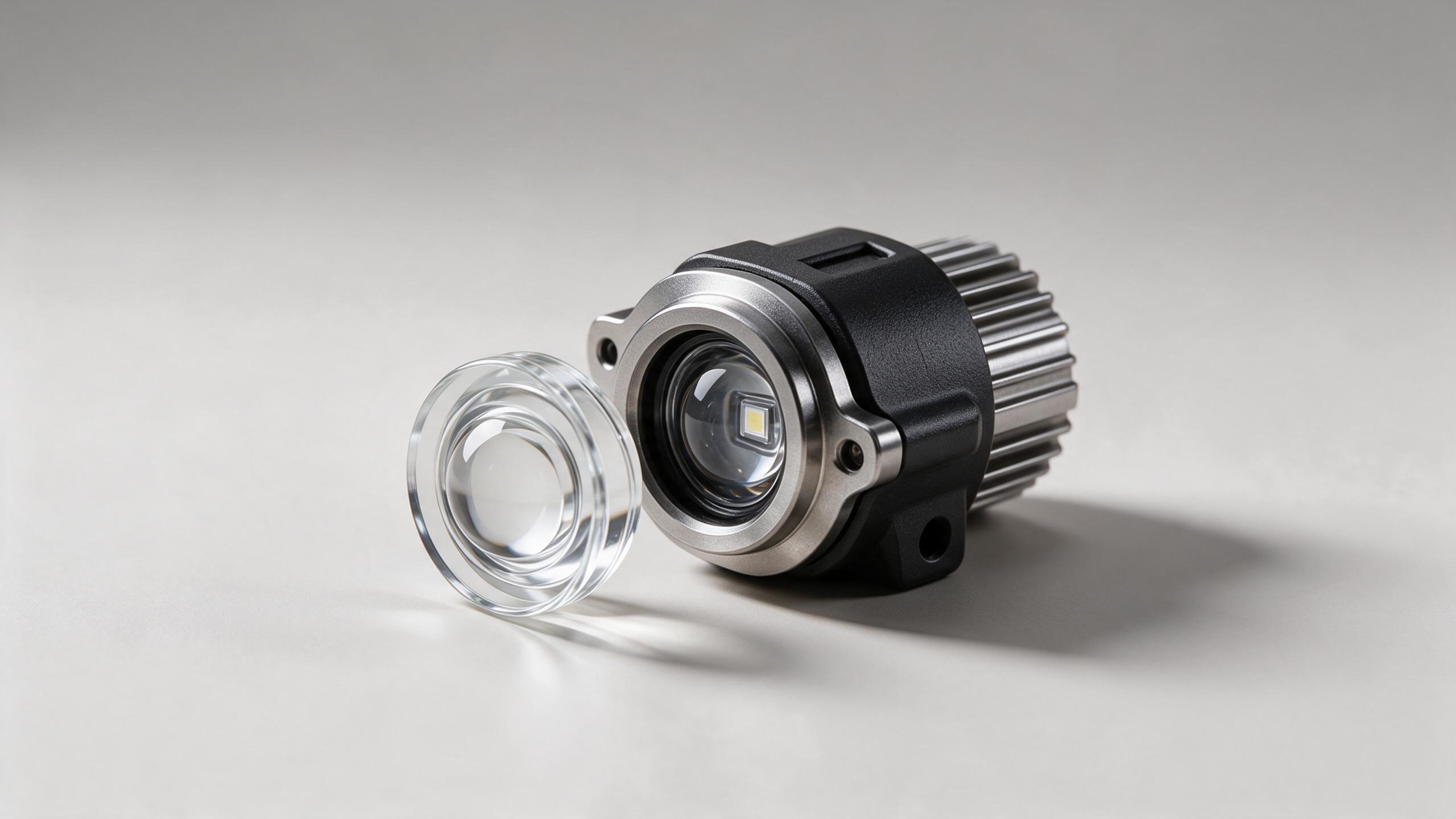
The focusing lens directs light from the illuminated logo toward the projection surface. Its shape, alignment and surface condition influence whether fine edges remain distinct at a given distance. Clean, properly aligned glass can transmit the image without adding the haze or optical distortion associated with a damaged element. “HD” is a descriptive term, not a standardized measurement of projected image quality; ask what the seller means by it.
Glass properties vary by formulation and treatment. Some glass surfaces can resist ordinary abrasion better than some untreated plastics, but an actual comparison depends on the materials, any coatings and the conditions of use. Glass can still scratch, chip or accumulate grime. A protective outer window may be a separate part from the internal focusing lens, so establish which component is made from glass before comparing samples.
An HD Glass Lens Motorcycle Logo Light should therefore be assessed as an assembly, not as a material label. Request a view of the optical layout or a written description identifying the front cover, focusing element and logo-bearing element. This helps distinguish a clear glass window from a projector whose internal image insert is also made of glass.
Why a projected logo can look faded
Several changes can produce a similar result. A dirty front surface scatters or blocks some light; moisture or deposits inside the housing can soften the image; movement of the lens can shift focus. A logo insert may discolor, while an aging LED or a fault in its power supply may reduce the light entering the optics. A dark, rough or wet projection surface and nearby ambient lighting can also change what a rider sees without any change to the lamp.
In a Motorcycle LED Logo Light, a blurred edge is not the same problem as lower output. If an edge becomes indistinct but the illuminated area remains bright, inspect cleanliness, focus and alignment. If the whole image grows dim while the outline remains defined, compare the electrical supply and light source as well as the optical path. Visible color change in the logo itself points toward the image insert or its illumination, not automatically the front lens.
LED light output can decrease over operating time, and thermal conditions affect that behavior. The housing's ability to transfer heat from the LED and the way the lamp is driven are therefore relevant alongside the glass. No lens can compensate for every change in the light source, and glass alone is not evidence of a particular service life.
Where glass may help—and where it cannot
A suitable glass element can retain its shape and optical clarity under its specified operating conditions. That may help preserve the focus and contrast originally designed into the projector. The benefit is conditional: the glass grade, finish, coating, mounting and environment all matter. Heat can still affect nearby adhesives, the image insert and electronics even when the lens itself remains clear.
Ultraviolet exposure is another reason to examine the entire light path. A particular glass composition may transmit or absorb different wavelengths, but a generic glass label does not establish UV protection for a logo slide. Ask which part carries the graphic, how it is made, and whether the supplier has exposure data for that exact assembly. Avoid assuming that glass blocks all UV or that every printed image will retain its color.
The phrase Non-Fading LED Ghost Shadow Light is useful as a search term, not a verified performance promise. For a Motorcycle LED Logo Light, look instead for measured before-and-after results under defined exposure and operating conditions. A seller's photo alone does not establish how the product will perform after months of road spray, cleaning and temperature changes.
How to compare samples without confusing the results
Before a bulk order, set up a repeatable comparison using the intended mounting position. Record the distance from each sample to the same flat, light-colored surface and keep the angle, ambient light and power supply consistent. Photograph each projection with the same camera settings and record the sample identity and operating duration. Compare legibility, edge definition, color and apparent brightness; a picture is a useful reference, not a calibrated output measurement.
Let the Motorcycle LED Logo Light run only within its supplier's stated limits, then compare its image at the same distance and conditions. For an objective output comparison, ask for photometric measurements and the test method rather than relying on phone exposure. If a supplier provides aging results, check the test duration, operating temperature, electrical conditions, sample count and acceptance criteria. A short demonstration should not be presented as a lifetime test.
- Identify the optical materials: Which elements are glass, what material holds the graphic, and are there coatings?
- Review environmental evidence: Are test results available for heat, vibration and water exposure on the actual assembled unit?
- Check the projection: At the intended distance, are small letters and edges readable on the surface where the light will be used?
- Confirm service information: Are cleaning guidance, replacement components and mounting instructions supplied for this model?
- Check batch consistency: Do samples from the same order show similar focus, color and finish?
In a hypothetical retail order, two lamps could produce equally attractive images indoors, yet only one may come with a documented optical layout and test conditions. That documentation gives the buyer a better basis for a follow-up assessment; it is not proof that either unit will outlast the other.
Care and installation affect image quality
Place a Motorcycle LED Logo Light where the projected image is visible without obstructing required vehicle lighting or distracting other road users. Rules for decorative lighting differ by location, so verify local requirements and the vehicle manufacturer's guidance. Confirm mounting clearance and electrical compatibility for the specific motorcycle; a model description alone does not establish fit.
For routine care, switch off the lamp and allow it to cool. Remove loose grit gently before wiping the outer surface with a soft clean cloth, following the lamp supplier's cleaning instructions. Do not assume a solvent is safe for coatings, seals or surrounding plastic. Avoid directing high-pressure water at connectors or opening a sealed housing unless the supplier's instructions permit it.
If the projection changes, document the conditions before replacing parts: take a comparable photograph, inspect the exterior and check the mounting position. For internal moisture, damaged wiring or an intermittent power connection, consult a qualified installer or the supplier rather than dismantling a powered unit.
What to ask a supplier before ordering
Provide the intended vehicle, mounting location, desired logo artwork and approximate projection distance. Ask for the optical material description, a sample, installation details and any test reports relevant to the intended environment. Also confirm packaging and order quantities directly; these terms vary by product and order.
Glass can be a useful component in a Motorcycle LED Logo Light when it is matched to a sound optical and electrical design. A consistent sample check, clear test conditions and realistic care instructions tell a buyer more about long-term image quality than a label alone.

 Hot News




