
 EN
EN
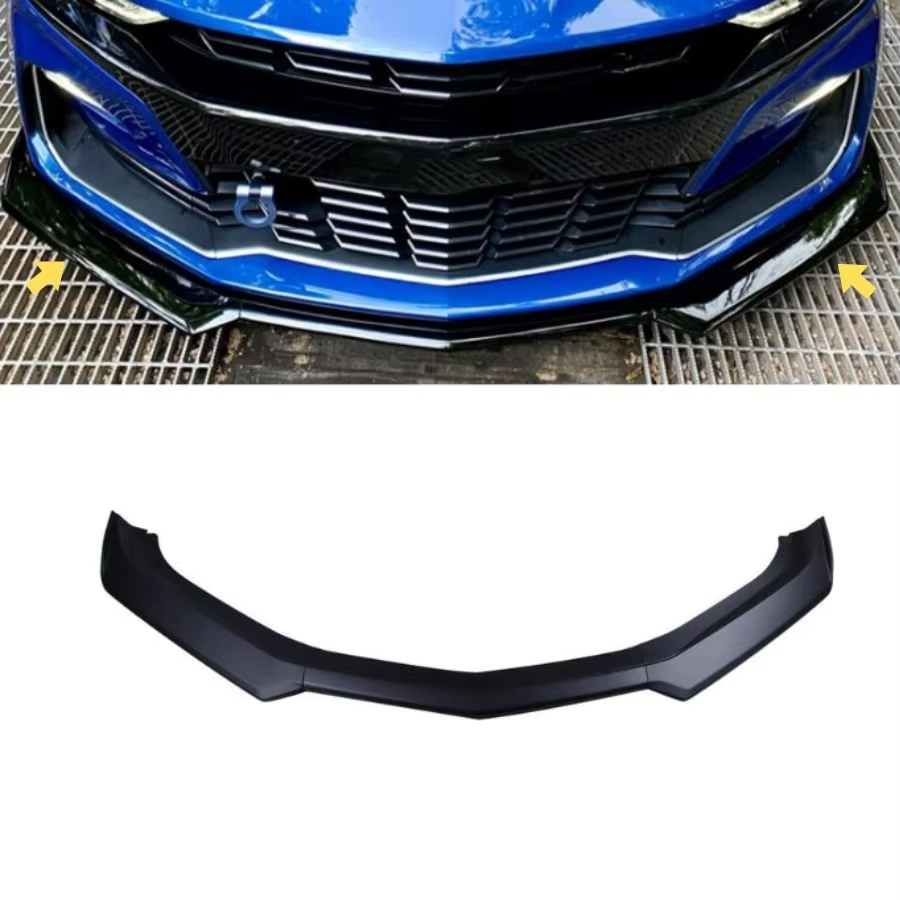
How an Auto Front Lip Improves Aerodynamics: Core Physics and Function
Managing Airflow Separation and Reducing Underbody Pressure
The front lip on an automobile functions basically as a barrier that helps redirect the air coming toward it. When driving at high speeds, the air tends to separate from the front bumper area, which creates turbulence and forms those low pressure spots underneath the car body. This actually causes lift forces that can make the vehicle less stable during operation. What happens when we extend the bumper profile? Well, the front lip delays this air separation process, allowing the airflow to stick closer to the shape of the vehicle instead of breaking away so quickly. Another benefit is that it limits how much air gets sucked into the undercarriage space, cutting down on underbody pressure by around 12 percent when compared with cars without such lips. This difference in pressure reduces unwanted lift effects, keeping tires properly grounded on the road surface. Plus, the smoother airflow pattern helps cut back on drag caused by random vortex formations that happen when air moves chaotically across the underside of vehicles.
Downforce Generation and Lift Reduction at the Front Axle
Front bumper lips create real downforce by manipulating air pressure differences. When air speeds up across the curved top part of the lip, it creates lower pressure there according to what Bernoulli figured out long ago. Meanwhile, the air underneath moves slower and stays at higher pressure. This pressure difference forces the front wheels down onto the road. Tests in wind tunnels show good designs can boost front wheel grip by around 15 to 30 percent when going about 60 mph. That helps fight against the tendency for front tires to lose contact with the road during tight turns at speed. The best part? Since this extra weight comes from airflow instead of heavy parts, drivers get better steering feedback without sacrificing how well the suspension works or comfort on regular roads.
Auto Front Lip Design Variables That Impact Performance
Material choice: carbon fiber vs. ABS plastic for stiffness and consistency
What materials we choose makes all the difference when it comes to how well something holds up aerodynamically and lasts over time. Carbon fiber composites are way better in terms of stiffness compared to their weight, usually around two to four times better than regular ABS plastic. They also don't expand much when heated, so they keep their shape even when things get hot on the track during those long summer races where pavement temperatures can hit over 60 degrees Celsius. On the flip side, ABS plastic is cheaper and pretty tough against impacts, but it starts to bend once speeds go past about 120 kilometers per hour. This bending messes with the air flow patterns around the car and makes it harder to predict how much downforce will be generated. The problem gets worse because ABS expands quite a bit when warm, sometimes up to 1.5 percent. This expansion causes parts like lips or spoilers to shift position relative to bumpers, which defeats the whole purpose of managing airflow efficiently.
Geometry trade-offs: lip height, width, and angle effects on downforce and drag
Optimizing lip geometry requires balancing competing aerodynamic goals:
- Height: Lips under 50 mm offer negligible downforce benefit and may increase lift; those exceeding 75 mm generate strong downforce but raise drag significantly. The 50–75 mm range delivers the best compromise for street-legal performance applications.
- Width: Full-width lips improve transverse airflow control but add 2–4% drag versus tapered or wheel-cut designs.
- Angle: Attack angles between 60° and 100° most effectively direct airflow around tires while suppressing underbody turbulence—maximizing downforce per unit of drag.
Even minor positional adjustments—such as a 5 mm vertical repositioning—can shift front-axle downforce by up to 8%, underscoring the importance of precise fitment and alignment with factory ride height and bumper contour.
Auto Front Lip vs. Air Dam: Real-World Aerodynamic Performance Comparison
BMW M2 Competition wind tunnel data: 12% front axle downforce gain
Testing in wind tunnels showed that when fitted with a properly integrated front lip, the BMW M2 Competition generated 12% more downforce on the front axle at speeds around 160 km/h than it did with just the standard air dam installed. What makes this happen? The extended design of the lip creates better sealing at the front of the car while pushing fast moving air away from underneath the vehicle body. This helps cut down on unwanted lift forces and keeps the steering feeling stable even when taking corners at high g-forces. As a practical outcome, drivers experience more predictable tire behavior because the contact patches maintain consistent pressure distribution across different driving conditions.
Porsche 911 GT3 RS track telemetry: high-speed stability above 180 km/h
Testing on track with the Porsche 911 GT3 RS showed something interesting about those automatic front lips. When going through those big sweeping corners at speeds over 180 km/h, cars with these lips had about 23 percent less side-to-side movement compared to regular air dams. What makes this work better is how the lip keeps the airflow stuck to the car even at crazy speeds where normal air dams start to fail. This means less floating around at the front and no annoying buffeting from the wind. Real drivers who tested this noticed they didn't have to correct their steering as much when braking hard from 200 km/h marks. About 15% less adjustment needed according to their reports, which points to a more predictable feel upfront and better overall balance when pushing the car to its grip limits.
FAQ
What is the primary function of an auto front lip?
An auto front lip primarily manages airflow separation to reduce underbody pressure and create downforce, thereby enhancing vehicle stability and steering feedback.
How does a front lip impact vehicle performance at high speeds?
A front lip improves vehicle performance at high speeds by delaying air separation, reducing lift forces, increasing downforce, and minimizing drag. This results in better tire grip and steering stability.
What materials are commonly used for front lips and why?
Carbon fiber and ABS plastic are commonly used materials. Carbon fiber is favored for its superior stiffness-to-weight ratio and resistance to heat expansion, while ABS plastic is valued for its cost-effectiveness and impact resistance.
How do geometry variables affect the performance of a front lip?
The height, width, and angle of a front lip influence its aerodynamic effectiveness, impacting the balance between downforce and drag. Optimal geometry depends on the desired performance application.
How does the performance of a front lip compare to an air dam?
Front lips generally offer better sealing and airflow management compared to air dams, resulting in enhanced downforce and reduced lift forces, leading to improved high-speed stability and steering control.
