
 EN
EN
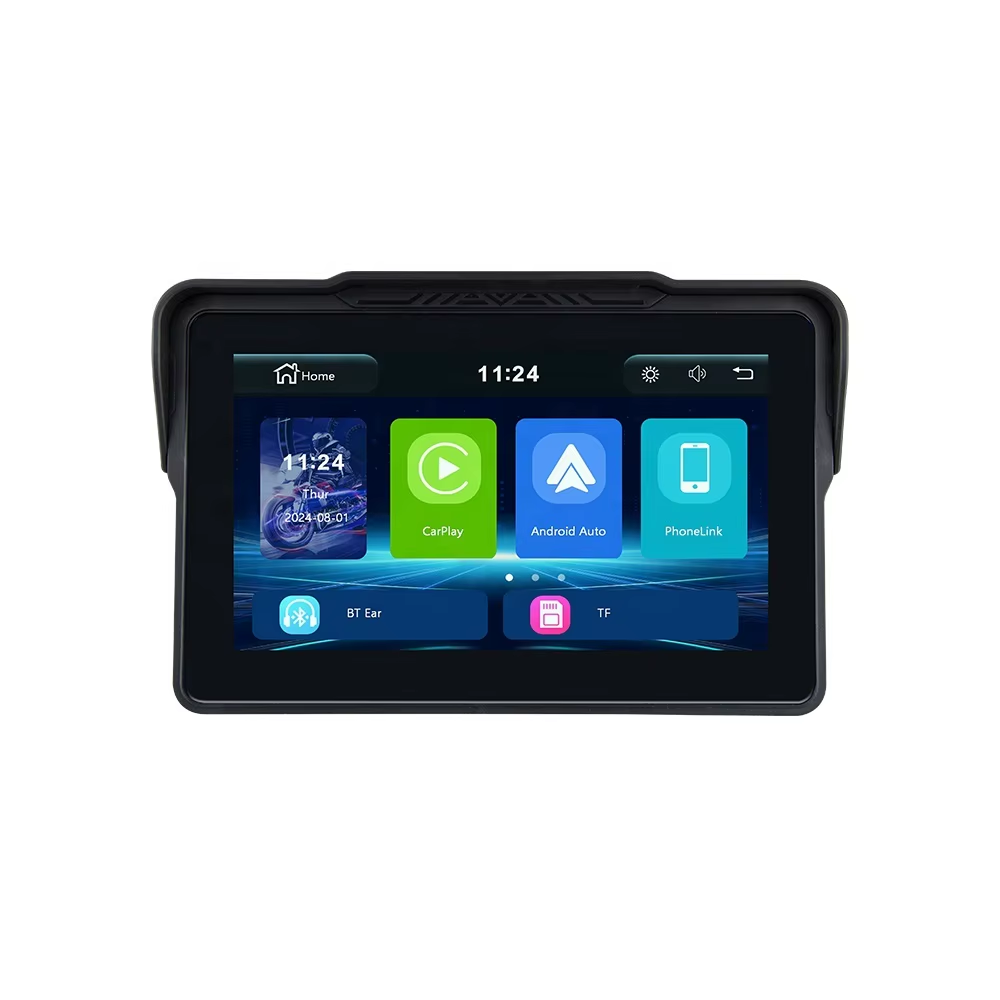
Motorcycle CarPlay Compatibility and Hardware Requirements
Matching Aftermarket Units (P7, M6, B6/B7) to Your Motorcycle Model
CarPlay units don't actually work on all motorcycles out there. Big cruisers usually have enough room in their dash areas to fit something substantial like the P7 series model. Sport bikes tell a different story though they need smaller versions such as the M6 because of limited space. When looking at what will work best, several things matter quite a bit. First off, making sure the wiring harness connects properly with the bike's CAN bus system is essential. Power requirements are another consideration most systems can handle around 5 volts at 2 amps max. There needs to be actual physical space somewhere close to the handlebars where the unit can mount securely. And if installing outside protection becomes necessary, then waterproof connectors become absolutely critical for keeping everything working reliably despite weather conditions.
A recent Motorcycle Industry Council study found that 75% of compatibility issues stem from improper power matching–so always verify your motorcycle’s voltage regulator capacity before installation.
| Unit Series | Best For | Power Requirement | Mounting Notes |
|---|---|---|---|
| P7 | Touring/Cruisers | 5V/3A | Requires 4"x3" space |
| M6 | Sport/Naked | 5V/2A | Fits clip-on handlebars |
| B6/B7 | Adventure | 5V/2.5A | Vibration-resistant |
iOS Version, Wireless Protocol, and Environmental Readiness for Seamless CarPlay
To get Wireless CarPlay working properly, devices need at least iOS 15 installed plus both bands of Wi-Fi (the 2.4GHz and 5GHz ones) as well as Bluetooth 5.0 Low Energy support. Motorcycles throw a whole different set of challenges though. The hardware has to survive constant vibrations meeting those SAE J1455 specs for over 5G forces. Temperature ranges are another concern too, since these gadgets must function across extremes from minus 20 degrees Celsius all the way up to scorching 70 degrees. Electromagnetic interference is something manufacturers worry about near motorcycle ignition systems, so good EMI protection becomes essential. And finally, waterproofing matters a lot on bikes, which is why most products come with IP67 rated enclosures to keep moisture out during rainy rides or wash downs.
Over 40% of connection drops are linked to outdated iOS versions, according to 2024 connectivity diagnostics. Enable “Automatic Connection” in iOS Settings and perform pre-ride pairing checks in garage conditions–engine off–to ensure stable handshake performance before hitting the road.
Achieving Seamless Wireless Connectivity While Riding
Pre-Ride Pairing Protocols to Prevent Mid-Ride Drops
It really helps to get into a habit of setting up all the connections before heading out on any ride. When the bike is parked safely in the garage and the engine isn't running, give those Bluetooth and Wi-Fi links a good check. See how quickly Siri responds when asked and whether maps load properly without lagging. Make sure the phone's operating system is updated to whatever Apple considers stable these days. Don't forget to turn on that Auto-Join feature for the head unit's network settings. For folks who rely on wireless adapters, there's one important trick worth remembering. Start connecting through the motorcycle's accessory mode instead of waiting until after turning the key. This prevents weird voltage drops that can mess up connections while riding down the highway at full speed. Trust me, nobody wants their GPS cutting out mid-turn.
Mitigating Vibration, Metal Interference, and Bluetooth Congestion
Vibrations can misalign internal antennas, and metal fairings act as Faraday cages, blocking signals. Counteract these by mounting transmitters away from engine blocks using vibration-damped holders, routing antennas vertically through plastic body panels (not metal), and prioritizing 5GHz Wi-Fi where supported to sidestep congestion in the crowded 2.4GHz band.
Position your phone in a tank bag constructed from signal-transparent materials–like ballistic nylon instead of metalized thermal liners–to preserve connectivity during sustained high-speed riding.
Optimizing Navigation for Motorcycle-Specific Riding Conditions
Turn-by-Turn Clarity, Real-Time Recalculation, and Offline Map Preparation
Motorcycle CarPlay really changes how riders navigate those tricky situations on two wheels. The system gives voice commands that actually work even when wearing a helmet, which is no small feat considering all the wind noise. Plus, the mounts are built to withstand vibrations so they don't fall off while making turns. This matters a lot since studies show around three out of four navigation mistakes happen at complicated intersections according to Rider Safety Journal back in 2023. When roads suddenly close down or traffic backs up, CarPlay adjusts routes almost immediately. Tests from the 2024 Connected Commuter Report found it gets riders back on track 40 percent quicker than regular GPS devices, especially helpful in busy city areas where getting lost can be frustrating and dangerous.
For remote adventures, pre-downloaded offline maps eliminate reliance on cellular coverage–adventure touring riders benefit significantly from cached topographic data when crossing mountain passes or unmarked forest trails. This glove-friendly approach ensures continuous, distraction-free guidance whether filtering through city grids or navigating trailheads.
Hands-Free Control and Voice Interaction That Works on the Move
Siri Optimization: Glove-Friendly Activation and Reduced False Triggers
Voice interfaces must overcome wind, engine noise, and gloved operation without compromising safety. Modern systems use directional microphones and AI-driven noise cancellation–reducing false triggers by 40% compared to automotive implementations (Voice UI Safety Study, 2023). Touch-sensitive helmets or handlebar buttons allow reliable activation without removing hands from controls.
Key refinements include context-aware processing that filters out non-voice vibrations, two-stage activation requiring deliberate pressure to prevent accidental engagement, and adaptive sensitivity profiles calibrated for different helmet types.
| Optimization Feature | Riding Benefit |
|---|---|
| Glove-compatible triggers | No hand removal from controls |
| Background noise filtering | Clearer command recognition above 60 mph |
| Delayed response threshold | Prevents wind gust misinterpretation |
These ensure natural, safe access to core functions–“reroute around traffic,” music control, or call management–without visual distraction. The system intelligently prioritizes essential tasks during high-vibration scenarios, balancing responsiveness with rider safety.
Ergonomic Mounting for Safe, Visible, and Weather-Resilient Use
Sunlight-Readable Displays, Vibration-Dampened Mounts, and IP-Rated Enclosures
Getting CarPlay to work smoothly on motorcycles really comes down to good mounting solutions made specifically for bikes. Most riders know how frustrating it can be trying to read a screen when the sun is blazing down. That's why displays need those special anti-glare coatings and should hit around 1000 nits of brightness or more so they stay visible even in bright daylight. The mounts themselves matter too. Good ones have those silicone dampeners inside that soak up all the road vibrations. Without them, touchscreens start acting up and hardware gets worn out faster from constant shaking at highway speeds where vibrations typically range between 30 and 70 Hz. Weather protection is another big concern. Enclosures rated IP66 with water-repelling seals keep rain out without messing up touchscreen operation. Makes sense when we look at numbers showing that nearly 7 out of 10 touring riders run into rain somewhere along their route according to Adventure Riding Survey findings from last year.
Combine these features with adjustable tilt angles (15°–45° range) to eliminate neck strain and support one-tap access without compromising riding posture.
| Feature | Performance Standard | Rider Impact |
|---|---|---|
| Display Visibility | >1000 nits brightness | Glare reduction in direct sunlight |
| Vibration Resistance | Dampens 5G+ acceleration | Prevents disconnections/map drift |
| Weather Protection | IP66 dust/waterproofing | Operational in heavy rain conditions |
FAQ
Can CarPlay work on all motorcycles?
No, CarPlay units are not compatible with all motorcycles. Specific considerations regarding space, power requirements, and mounting options must be evaluated for successful installation.
What iOS version is required for Wireless CarPlay?
You need at least iOS 15 along with both the 2.4GHz and 5GHz Wi-Fi bands and Bluetooth 5.0 Low Energy support to ensure proper functionality.
Why is vibration resistance important for CarPlay on motorcycles?
Vibration resistance is crucial because motorcycles experience constant vibrations, which can misalign antennas and affect connectivity. Proper dampening helps maintain stable connections.
Do I need offline maps for Motorcycle CarPlay?
Yes, having offline maps pre-downloaded ensures continuous navigation even in areas with limited cellular coverage, which is particularly useful for adventure or remote rides.
Table of Contents
- Motorcycle CarPlay Compatibility and Hardware Requirements
- Achieving Seamless Wireless Connectivity While Riding
- Optimizing Navigation for Motorcycle-Specific Riding Conditions
- Hands-Free Control and Voice Interaction That Works on the Move
- Ergonomic Mounting for Safe, Visible, and Weather-Resilient Use
- FAQ
