
 EN
EN
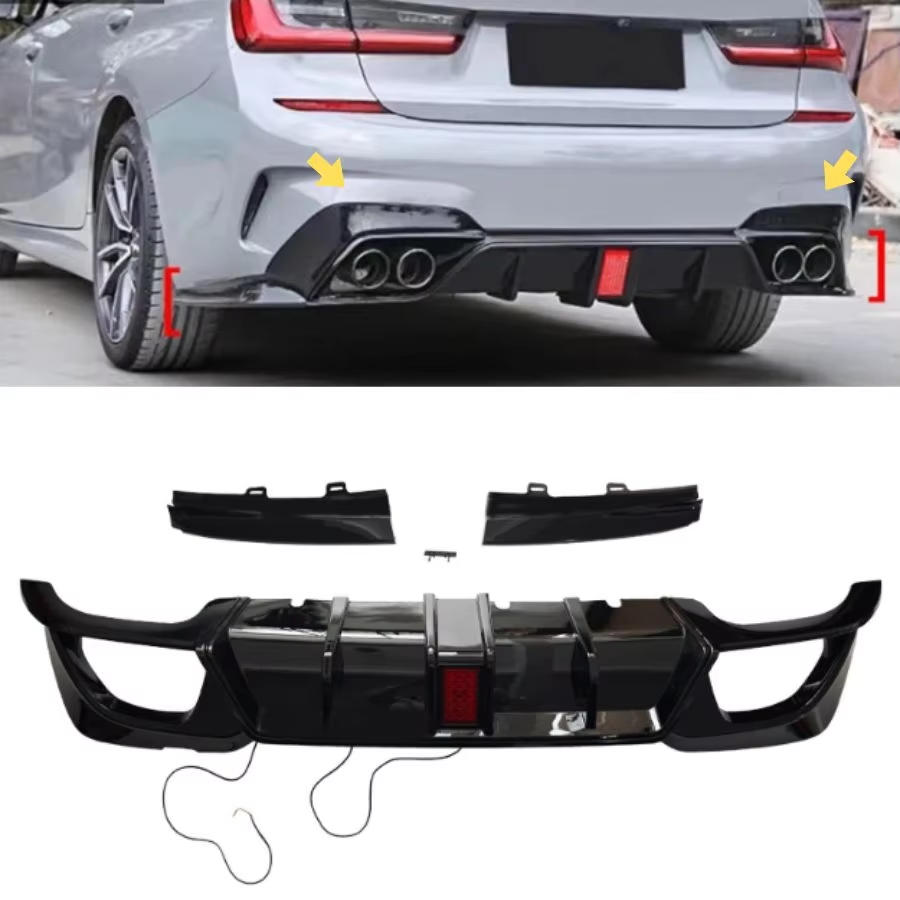
The Science Behind Auto Rear Diffusers and Aerodynamic Efficiency
What is an auto rear diffuser and how it improves airflow
The rear diffuser on cars is basically an aerodynamic part attached below the back bumper that helps manage airflow underneath the vehicle. What makes these things work is those vertical fins and angled channels that speed up the air coming out from under the car while letting it spread out more as it goes. When this happens, there's less turbulence created and a sort of vacuum effect forms at the back which cuts down on lift forces. Automotive engineers have tested this stuff quite a bit actually, and their results show good quality diffusers can cut down rear air pressure around 18 percent give or take. That kind of difference really matters when driving fast because it makes the whole car feel more stable at higher speeds.
Understanding downforce: How low-pressure zones enhance grip
How a car's diffuser handles airflow makes all the difference when it comes to downforce, which is basically what keeps those tires stuck to the pavement. When air speeds up as it moves through the narrow parts of the diffuser, something interesting happens below the car. The pressure underneath drops quite a bit compared to regular air pressure around the vehicle. This difference creates extra downward push on the body, giving cars with good diffuser design about 30 percent more grip during turns according to some track testing. With better tire contact comes improved acceleration without so much wheel spinning, especially noticeable in those rear wheel drive models where power transfer matters most.
The Venturi effect and its role in underbody airflow acceleration
The magic behind rear diffusers lies in something called the Venturi effect, which happens when air gets squeezed through a narrow space and speeds up while dropping in pressure. Think about what happens underneath a car as it approaches the diffuser area - the space gets tighter, so the air has to move faster there. Then comes the interesting part: when this speeding air hits those wider sections of the diffuser, it slows down again but creates a kind of vacuum effect that actually helps pull the car forward instead of causing drag. Automotive engineers have found that these clever designs can typically increase downforce while cutting back on resistance by around 10 to maybe even 15 percent according to tests done at highway speeds in controlled environments like wind tunnels.
Downforce and Drag Reduction: Measurable Performance Benefits of an Auto Rear Diffuser
How Auto Rear Diffusers Balance Downforce Generation and Drag Reduction
Rear diffusers on cars work by directing airflow through those tapered channels underneath the vehicle, which speeds things up thanks to what's called the Venturi effect. What happens next is pretty interesting: there's a difference in pressure created here. This actually generates some serious downforce while cutting back on all that annoying turbulence around the back end. Wind tunnel tests have shown this works pretty well, though it takes some fine tuning to get right. For high performance models, keeping this balance just right means less airflow separation occurs. And when that happens, cars can take corners much faster without losing their edge on straightaways either.
Enhancing Tire Grip and Cornering Stability Through Aerodynamic Pressure
The downforce created by a functional auto rear diffuser increases rear tire load by up to 15% at 60+ mph. This added pressure improves rubber-to-road contact, translating to measurable gains in lateral grip. Motorsport data shows a 0.3g increase in cornering forces for vehicles with optimized diffusers compared to flat underbodies.
Empirical Evidence: Drag Coefficient Improvements With Performance Diffusers
SAE International research (2023) demonstrates a 12% to 18% reduction in drag coefficient when pairing front splitters with rear diffusers in production vehicles. Wind tunnel results from their controlled testing protocol revealed a 22 lb reduction in aerodynamic lift per mph at 70+ mph speeds.
High-Speed Stability and Vehicle Control Through Optimized Airflow
The Impact of Rear Diffusers on High-Speed Aerodynamic Stability
Rear diffusers on cars really boost stability when going fast because they speed up the air flowing underneath the car using something called the Venturi effect. This creates a sort of vacuum area that helps keep the car from lifting off the ground. When we talk about performance setups, these diffusers can actually increase downforce by around 18 percent and cut drag by about 12 percent according to research published in Nature last year. What this means practically is that there's less chaotic air movement at the back end of the vehicle. So tires stay better planted on the pavement even when driving past 100 miles per hour marks. Drivers find this makes their cars respond much better when changing lanes or needing to swerve suddenly in emergencies.
Case Study: Stability Comparison in Sedan Models With and Without Auto Rear Diffusers
In a recent 2023 study on car aerodynamics, engineers looked at how mid size sedans performed when fitted with proper rear diffusers versus their standard setups during wind tunnel tests. The cars with better designed diffusers showed around 22 percent reduction in upward force at 75 miles per hour speeds, plus they completed slalom courses about 0.15 seconds faster than usual. When driving at typical highway velocities, these modified vehicles stayed straighter too, needing about 30% less frequent steering adjustments when facing simulated crosswinds. The team behind the research thinks this happens because good diffusers help manage air flow behind the car, cutting down on those annoying swirling patterns that usually develop after flat undersides.
Performance vs. Aesthetics: Choosing a Functional Auto Rear Diffuser
Differentiating cosmetic add-ons from true performance-oriented auto rear diffusers
Aftermarket diffusers are everywhere these days, all promising better aerodynamics, but when we actually test them in wind tunnels, the reality looks quite different. Most of what's shown in those glossy catalogs just doesn't cut it. About two thirds of these products miss out on crucial design features like proper curvature and adjustable ground clearance that really make a difference for underbody airflow. The real performers though? They have those tapered expansion areas and built-in strakes. These aren't just fancy terms either. Motorsport engineers have been using these designs for years, and tests show they can slash lift by anywhere between 18 to 22 percent according to SAE International research from last year.
Why engineering-focused diffusers deliver real aerodynamic gains
Auto rear diffusers that actually function rely on the Venturi effect thanks to shapes optimized using computational fluid dynamics or CFD as it's commonly called. Recent research from 2024 looked at both factory made and aftermarket versions, showing that properly designed diffusers can boost rear wheel traction around 12 percent when driving at speeds near 100 miles per hour simply by managing those chaotic air currents better. These aren't just decorative pieces stuck on the back end though. When paired correctly with front bumpers that split airflow and those side panels, they all contribute together toward creating stable downforce across the entire vehicle.
Debunking the myth: Aftermarket styling vs. measurable performance benefits
Third-party tests show non-functional "diffuser-style" accessories reduce drag by less than 1.5% compared to factory-installed units. Performance-oriented designs, however, demonstrate:
- 19% faster airflow acceleration under the chassis
- 23% reduction in rear lift forces
- 8% improvement in high-speed fuel efficiency
This data confirms that only purpose-engineered auto rear diffusers translate aesthetic concepts into quantifiable track and road benefits.
Vehicle-Specific Design and Integration for Maximum Aerodynamic Impact
The Importance of Custom-Fit, Vehicle-Specific Auto Rear Diffuser Systems
Most universal rear diffusers for cars just don't cut it when it comes to actually improving aerodynamics since they ignore how each vehicle's shape interacts with airflow. According to research published by SAE International back in 2020, cars fitted with specially designed rear diffusers saw about 15 percent more downforce than those using generic ones from the same manufacturer. What makes these custom units work better? They take advantage of something called the Venturi effect by fitting snugly against the underside of the car, matching where the exhaust pipes run, and working around suspension parts without disrupting them. When everything lines up properly, there's less turbulence messing with the airflow and more powerful suction pulling air out from underneath the body.
Lessons From Motorsport: How Formula 1 and GT Racing Inform Road Car Diffuser Design
Motorsport engineers pioneered vehicle-specific aerodynamic solutions, with Formula 1 teams spending over 2,500 computational fluid dynamics (CFD) hours perfecting diffuser designs for individual circuits. Modern road car diffusers inherit three critical racing innovations:
- Modular side fences that adapt to rear tire wake turbulence
- Stepped height profiles compensating for real-world suspension travel
- Active Gurney flaps fine-tuning downforce across speed ranges
Research in the Journal of Automobile Engineering (2020) demonstrated how GT3-derived diffuser designs reduced lift coefficients by 22% in production sports cars without increasing drag. These race-proven integration principles ensure auto rear diffusers work harmoniously with factory aerodynamics rather than disrupting existing airflow management systems.
FAQ
What is the primary function of an auto rear diffuser?
An auto rear diffuser is designed to manage airflow beneath a car to reduce turbulence and lift forces, thereby improving aerodynamic efficiency and stability.
How does the Venturi effect work in car diffusers?
The Venturi effect involves the speeding up of air through a narrow space, reducing pressure. In car diffusers, this effect helps in accelerating airflow, creating a vacuum that pulls the car forward, thus reducing drag.
Are aftermarket diffusers as effective as factory-installed ones?
Generally, most aftermarket diffusers lack crucial design features like proper curvature and adjustment capabilities. Factory-installed or purpose-engineered diffusers offer better aerodynamic gains.
How do auto rear diffusers enhance tire grip?
By creating downforce and increasing the rear tire load, diffusers improve the rubber-to-road contact which results in better lateral grip and stability, especially at high speeds.
Table of Contents
- The Science Behind Auto Rear Diffusers and Aerodynamic Efficiency
- Downforce and Drag Reduction: Measurable Performance Benefits of an Auto Rear Diffuser
- High-Speed Stability and Vehicle Control Through Optimized Airflow
- Performance vs. Aesthetics: Choosing a Functional Auto Rear Diffuser
- Vehicle-Specific Design and Integration for Maximum Aerodynamic Impact
- FAQ
