
 EN
EN
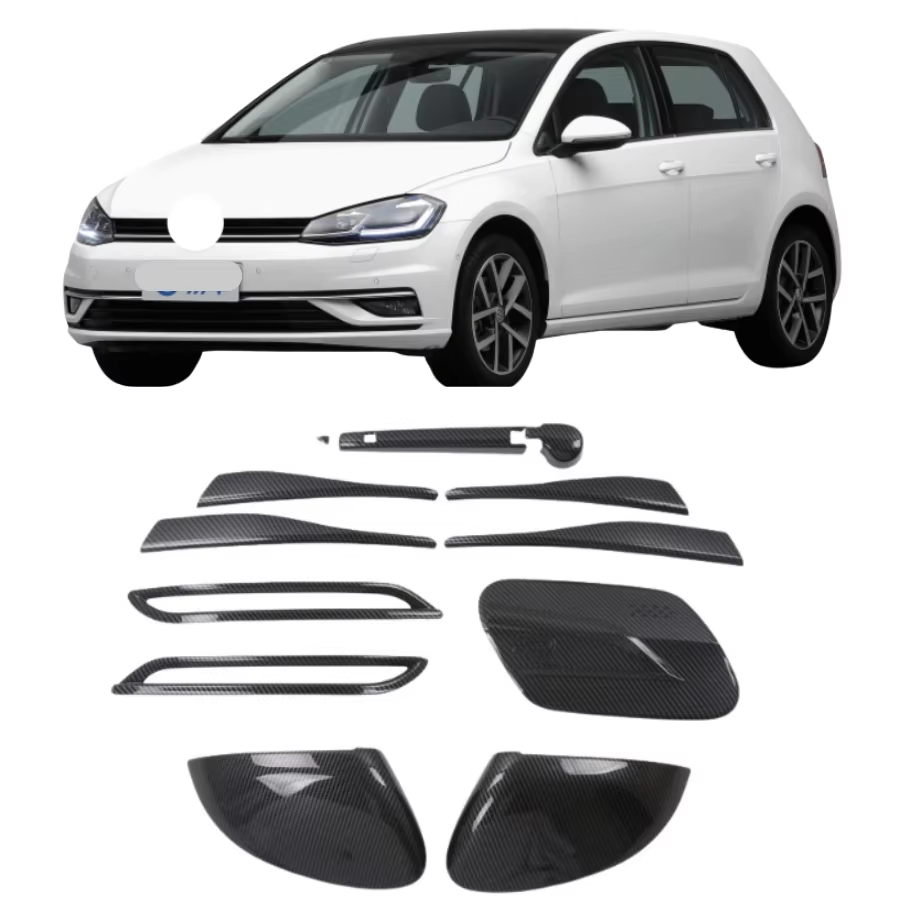
Body Kits and Weather: What Actually Holds Up Over Time?
Let's be real—a body kit looks amazing the day you install it.
But what about two years later? Three? Five?
If you've ever seen a faded, chalky bumper that used to be glossy black, you know what we're talking about. The sun, the heat, the cold, the gravel—they all take their toll.
The question is: which material actually survives?
We've seen ABS kits that still look great after half a decade. And we've seen resin kits that started falling apart in under three years. The difference isn't luck—it's chemistry.
Here's what actually matters when it comes to weather resistance.
UV Degradation: The Sun Is Not Your Friend
The sun is relentless. And it doesn't care how much you spent on your kit.
UV radiation breaks down polymers at the molecular level. The result? Chalking, fading, and a dull, lifeless finish that no amount of wax can fix.
ABS: The UV Survivor
ABS copolymers inherently resist UV better than most resin variants—but they're not invincible. Without UV stabilizers, even ABS starts to yellow and embrittle after 2–3 years of direct sun exposure.
Here's the good news: properly UV-stabilized ABS kits retain over 85% of their original gloss after 3,000 hours of accelerated weathering testing. Unstabilized resin kits? They lose 30–40% of their gloss in the same period.
That's not a small gap. That's the difference between a kit that still looks good and one that looks like it's been through a war.
Resin: The Sun's Favorite Victim
Polyester and vinyl ester resins are highly susceptible to UV-induced chain scission—which is a fancy way of saying the sun literally breaks their molecular bonds.
The result: micro-cracking, chalking, and a surface that traps moisture and accelerates further degradation. Once the damage starts, it snowballs.
The takeaway: If you live in a sunny state—Arizona, California, Texas—UV resistance isn't optional. It's survival.
Thermal Cycling: Heat and Cold, Back and Forth
Your car doesn't live in a climate-controlled garage. It sees blazing heat, freezing cold, and everything in between.
And those temperature swings do real damage.
ABS: Handles the Swings
ABS has a glass transition temperature around 105°C—meaning it stays tough and stable well above most real-world temperatures. It maintains toughness down to –20°C, so cold weather doesn't make it brittle.
Here's the catch: prolonged exposure above 90°C—like engine bay heat or desert sun on a dark panel—can soften ABS. If the panel doesn't have adequate structural support, it can warp.
But for most applications? ABS handles thermal cycling beautifully. Its slight flexibility helps absorb differential expansion between the coating and substrate, preventing those hairline cracks that plague rigid materials.
Resin: Cracks Under Pressure
General-purpose polyester resin has a heat deflection temperature of just 60–80°C. Above that? It softens and deforms. And in freezing conditions? It becomes brittle.
Worse, resins lack the flexibility to absorb thermal expansion and contraction. So when the coating expands differently than the substrate, you get—you guessed it—hairline cracks.
Field data from high-heat regions shows ABS components retaining shape after 5+ years of daily temperature swings. Resin equivalents? They're often warping or micro-cracking within 3–4 years.
Impact Resistance: Gravel Doesn't Care About Your Paint Job
Road debris is inevitable. Gravel, stones, ice—they're all coming for your front bumper.
The question is: does your kit bounce back or crack?
ABS: The Energy Absorber
ABS's butadiene rubber content gives it exceptional energy absorption. At room temperature, its notched Izod impact strength exceeds 300 J/m. Even at –30°C, it stays ductile enough to resist shattering.
In standardized gravelometer tests (SAE J400), ABS panels showed minimal chipping after 10 impacts at –20°C.
Ten impacts. At freezing temperatures. Minimal chipping.
That's impressive.
Resin: Brittle by Nature
Rigid polyester resin has impact strength of just 50–80 J/m at freezing temperatures. That's a fraction of ABS's capability.
The result? Cracks. Gouges. Punctures from impacts that ABS would shrug off. Vinyl ester improves things slightly, but it's still nowhere near ABS.
Bottom line: If you drive on real roads, you want ABS on the front bumper and lower valances—the areas that take the most abuse.
The Chemistry Behind the Difference
Here's why ABS wins—and it's not marketing fluff.
ABS: Three Monomers, One Tough Material
ABS is a terpolymer—a combination of three monomers:
-
Styrene: Provides rigidity and a glossy surface.
-
Acrylonitrile: Adds chemical resistance and heat stability.
-
Butadiene: The game-changer. It's a rubber that acts like microscopic shock absorbers.
When debris hits, the butadiene rubber particles deform and stop cracks from spreading. When temperatures swing, they absorb stress. When UV hits, the acrylonitrile and stabilizers fight back.
It's a self-reinforcing system that's built to survive.
Resin: No Rubber Phase
Resins—polyester, epoxy, vinyl ester—lack that integrated rubber phase. They're rigid. And rigid materials crack under stress.
They also absorb moisture (polyester is notorious for this), which leads to blistering and delamination during freeze-thaw cycles. UV exposure accelerates surface degradation. It's a cascade of failures that ABS simply doesn't experience.
The Data: SAE J2527 Accelerated Weathering Test
The SAE J2527 protocol is the gold standard for predicting real-world durability. It uses filtered xenon arc lamps and condensation cycles to simulate years of sun and moisture exposure.
After 5,000 hours of testing:
| Material | Gloss Retention | Impact Resistance Loss | Visible Degradation |
|---|---|---|---|
| ABS (stabilized) | >85% retained | <15% loss | Minimal; color shift below ΔE 2.0 |
| Polyester Resin | 60–70% lost | 40% loss | Severe yellowing, chalking, micro-cracks |
| Epoxy Resin | Significant loss | 30%+ loss | Yellowing, surface weakening |
These lab results match real-world observations from high-UV climates. ABS kits maintain appearance and integrity over multi-year service. Resin kits show progressive fading, cracking, and delamination.
Our Honest Take
Look, we're not saying ABS is perfect. Under extreme heat with poor support, it can warp. Without proper UV stabilizers, it can yellow.
But here's the reality: for real-world driving, ABS consistently outlasts resin-based kits.
-
Better UV resistance.
-
Better thermal cycling tolerance.
-
Better impact resistance.
-
Better long-term appearance.
Resin kits have their place—they're cheaper to produce and can achieve complex shapes. But if you're building a car that actually sees the road, sun, and weather? ABS is the smart money.
What to Look For When Buying
If you're shopping for a body kit and want it to last:
1. Ask about UV stabilizers. Not all ABS is created equal. Stabilized ABS is what you want.
2. Check the heat deflection temperature. If the manufacturer can't tell you, that's a red flag.
3. Look for proven test data. SAE J2527 results or similar accelerated testing is a good sign.
4. Consider your climate. If you're in a hot, sunny, or freeze-thaw region, ABS is even more critical.
Got Questions? We're Here.
Not sure what material is right for your build and your climate? Drop us a line. We'll help you sort it out—no hype, no pressure.
Because at the end of the day, we want your kit to look as good five years from now as it does on day one.
FAQs
Why does ABS resist UV better than resin?
ABS contains UV stabilizers and an acrylonitrile component that resists photodegradation. Polyester and epoxy resins lack this protection, leading to chalking and fading.
Can ABS body kits handle extreme heat?
Yes—up to about 90°C before softening occurs. With proper structural support, ABS maintains shape in most real-world conditions.
Why do resin kits crack more easily?
Resins lack the rubber (butadiene) phase that ABS has. This rubber absorbs impacts and thermal stress, preventing cracks from spreading.
How long will a quality ABS kit last outdoors?
With proper UV stabilization, an ABS kit can maintain its appearance and structural integrity for 5+ years of daily outdoor exposure.
What's the SAE J2527 test?
It's an accelerated weathering test that simulates years of UV and moisture exposure in a lab. It's a strong predictor of real-world durability.
Table of Contents
- Body Kits and Weather: What Actually Holds Up Over Time?
- UV Degradation: The Sun Is Not Your Friend
- Thermal Cycling: Heat and Cold, Back and Forth
- Impact Resistance: Gravel Doesn't Care About Your Paint Job
- The Chemistry Behind the Difference
- The Data: SAE J2527 Accelerated Weathering Test
- Our Honest Take
- What to Look For When Buying
- Got Questions? We're Here.
- FAQs
