
 EN
EN
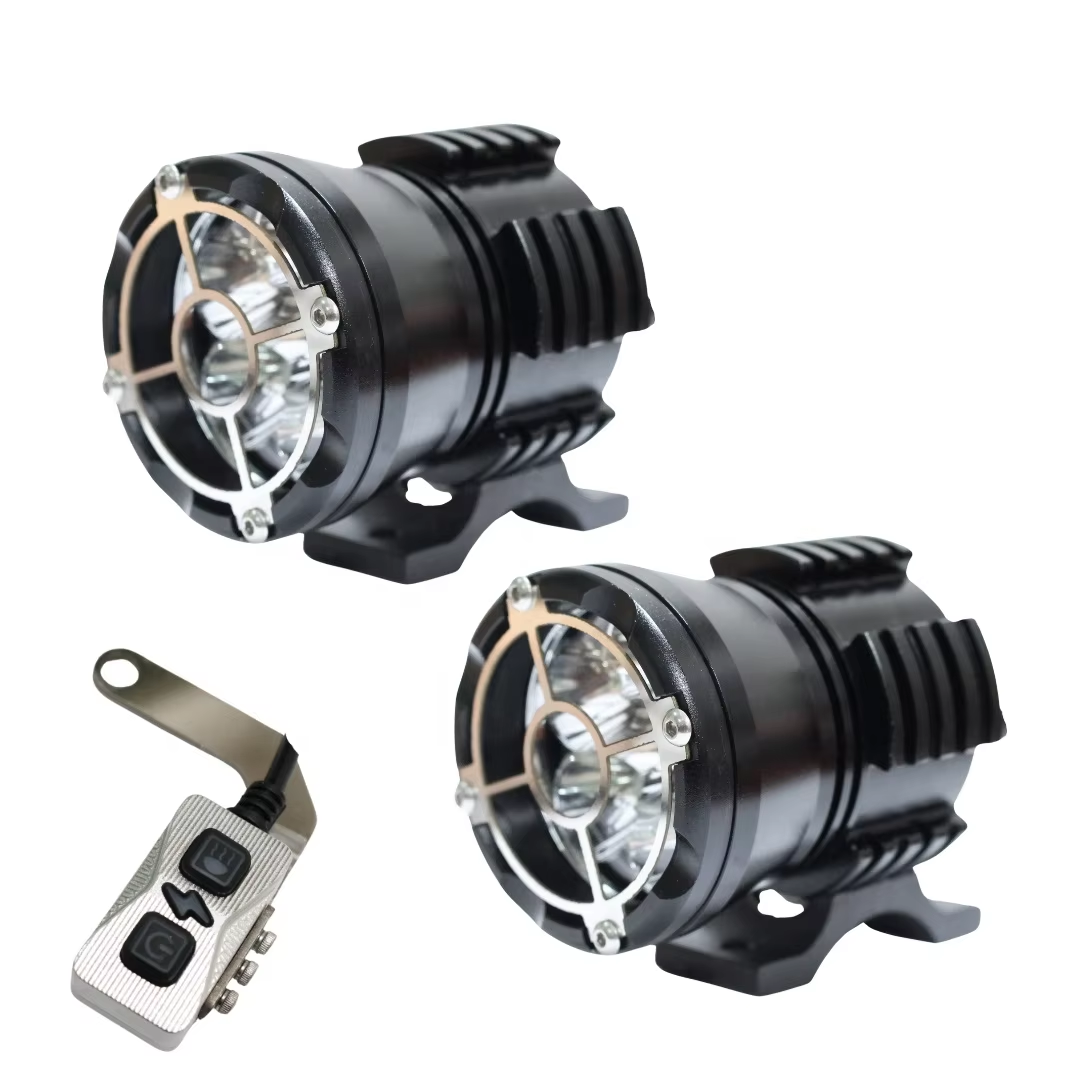
Night Riding Is Risky. Here's How Dual-Color Fog Lights Actually Help.
Let's be honest—riding at night is a completely different game.
Your depth perception drops. Colors wash out. Reaction times slow down. And that little headlight beam in front of you? It's doing its best, but it's not enough. Not even close.
We've all been there. You're on a dark rural road, leaning into a curve, and suddenly—a pothole. Or debris. Or an animal. By the time your headlight reveals it, you've got fractions of a second to react.
The numbers back this up: according to the NHTSA, the fatal crash rate per mile at night is roughly three times higher than during the day. Fatigue makes it worse. Poor lighting makes it worse.
So what actually works? More and more riders are turning to auxiliary fog lights—specifically, dual-color systems that give you both yellow and white light. But why does that matter? Let's dig in.
First, Let's Talk About How Your Eyes Actually Work at Night
Here's something most riders don't think about—your eyes aren't designed for the dark.
You've got two types of light-sensitive cells in your retina:
-
Rod cells handle night vision. They're most sensitive to blue-green light (around 498 nm), but they're terrible at picking up the redder wavelengths that many headlights pump out.
-
Cone cells handle sharp central vision and color. They peak around green-yellow (555 nm), but they need more light to activate.
The problem? Standard headlights are heavy on the blue-white spectrum. That's great for daytime-like visibility—but at night, it forces your eyes to work overtime, constantly adapting and readapting.
Enter yellow light.
Yellow light sits right in that sweet spot—around 570–590 nm—where it stimulates both rods and cones at the same time. The result? Better contrast. Better depth perception. Less eye strain.
And when you combine yellow with white light in a dual-color system? You get the best of both worlds. White for sign readability and crisp clarity. Yellow for cutting through fog and reducing glare. Together, they help your eyes transition faster between lit and dark zones—so you spot hazards sooner, without feeling drained after a long ride.
Real-World Proof: What the ADAC 2023 Field Test Found
We can talk science all day, but here's what actually matters—does it work on the road?
The German automobile club ADAC ran a field test in 2023. They put riders on a closed course with different auxiliary lighting setups—single-color and dual-color—and measured how far out they could detect objects.
The results?
Dual-color systems extended average object detection range by 37% compared to white-only or yellow-only alternatives.
That's not a small number. In a real-world scenario, that extra 37% could mean spotting a pedestrian or a piece of debris a few seconds earlier—enough time to react safely.
Testers also reported less eye strain and more confidence when using dual-color lights. The engineers noted that the yellow beam cut through mist while the white beam clarified lane markings—something single-color setups just couldn't match.
Data-backed performance. Clearer vision. Safer riding. That's why we're all-in on dual-color.
The Myth: "Brighter White Light Is Always Better"
There's a common belief among riders that if a light is bright and white, it's the best option. Period.
But physics says otherwise.
Here's what happens: white LEDs have a strong blue-spectrum component. In clear weather, that's fine. But throw in some fog or heavy rain, and that blue light scatters like crazy. You've probably experienced this—riding into a wall of white glare, unable to see anything beyond your front wheel.
That's called backscatter. And it's dangerous.
Now here's where yellow light shines—literally. Yellow wavelengths are longer, so they don't scatter as easily. Instead of bouncing off every water droplet and blinding you, they cut right through.
So when you have a dual-color system, you're not just getting two colors. You're getting:
| Condition | What White Does | What Yellow Does |
|---|---|---|
| Light mist/rain | Good distance, but lots of glare from wet roads | Cleaner contrast with less bounce-back |
| Moderate fog | Starts to wash out, losing definition | Cuts through vapor, sharpens road edges |
| Heavy fog | Basically useless—white wall effect | Actually penetrates, shows lane markings and close hazards |
That's why we say: dual-color isn't a gimmick. It's a tool. And the right tool for the right conditions makes all the difference.
LED Engineering: It's Not Just About Color
Alright, let's talk hardware—because color is only half the story.
Modern LED auxiliary lights are ridiculously efficient. We're talking over 80% of energy converted into usable light, which means less strain on your bike's electrical system. No more worrying about stator draw.
And durability? Solid-state LEDs routinely last 50,000+ hours. No fragile filaments to snap from vibration. No frequent bulb replacements. Just consistent, reliable output ride after ride.
But here's the part that matters for your comfort: glare control.
A well-designed asymmetric beam cutoff directs light onto the road—not into the eyes of oncoming traffic. And with dual-channel PWM (Pulse Width Modulation) dimming, you get smooth, flicker-free transitions between yellow and white modes. No jarring brightness jumps that force your eyes to re-adapt every time you switch.
Research shows that stable, low-glare illumination can cut visual fatigue by up to 40% compared to conventional single-beam setups. That means longer rides, clearer vision, and arriving less exhausted.
So, Is Dual-Color Worth It?
Let's cut through the noise.
If you only ride in perfect weather and never venture out after dark? Maybe you don't need it.
But if you're a real rider—someone who commutes, tours, or just loves being on two wheels—you know the weather doesn't always cooperate. And the sun sets every single day.
Dual-color auxiliary fog lights give you:
-
Better detection range (37% more, per the ADAC test)
-
Less eye strain on long night rides
-
The flexibility to adapt to fog, rain, mist, or clear conditions
-
Lower power draw and longer lifespan than traditional bulbs
That's not marketing fluff. That's real-world advantage.
Our Take
We've been building and testing lights for riders who actually ride—in the rain, in the fog, on dark backroads, and through long hauls. And we've seen firsthand what a difference dual-color systems make.
It's not about having the fanciest lights on the block. It's about seeing what's ahead—clearly, consistently, and without exhausting your eyes.
So if you're still running stock headlights and wondering why night riding feels so sketchy? Give dual-color auxiliary lights a try. Your eyes—and your safety—will thank you.
Got Questions? We're Here.
Not sure which setup fits your bike or your riding style? Drop us a line. We'll help you figure it out—no pressure, no jargon.
Because at the end of the day, we want you to ride confident. Day or night.
FAQs
Why aren't standard headlights enough for night riding?
Standard headlights cast a narrow beam that leaves road shoulders and curves in the dark. Combined with reduced night vision, that makes hazards harder to spot until it's too late.
What's the advantage of yellow light in fog?
Yellow light has a longer wavelength that scatters less in moisture—so it cuts through fog and rain instead of bouncing back and blinding you.
Do dual-color lights really reduce eye strain?
Yes. By stimulating both rod and cone cells more efficiently, and using PWM dimming to avoid jarring brightness shifts, they significantly reduce visual fatigue on long rides.
Are LED auxiliary lights efficient?
Extremely. They convert over 80% of energy into light, draw less power, and last 50,000+ hours—far outlasting traditional bulbs.
How much better is object detection with dual-color?
In the ADAC 2023 field test, dual-color systems improved object detection range by 37% compared to single-color setups.
Table of Contents
- Night Riding Is Risky. Here's How Dual-Color Fog Lights Actually Help.
- First, Let's Talk About How Your Eyes Actually Work at Night
- Real-World Proof: What the ADAC 2023 Field Test Found
- The Myth: "Brighter White Light Is Always Better"
- LED Engineering: It's Not Just About Color
- So, Is Dual-Color Worth It?
- Our Take
- Got Questions? We're Here.
- FAQs
